

































All Land
Discover the latest land for sale
![Premium Bungalow Lot at Presint 10, Putrajaya [Neighbour with PM, Ministers & VIP] photo](https://atlasstaging.s3.amazonaws.com/images/subsales/image/802466/medium/c9bc9b4f13e4b6932f71dea4a548aadd46794841.jpg?1725348390)
Premium Bungalow Lot at Presint 10, Putrajaya [Neighbour with PM, Ministers & VIP]
Presint 10, Putrajaya
RM 2,634,900
Listed on September 3, 2024

taman yarl
old klang road
RM 1,266,760
Listed on September 3, 2024

Serom 4, Taman Serom Jaya
Sungai Mati, Serom 4, Sebelah Taman Serom Jaya
RM 5,400,000
Listed on September 3, 2024

Sepanggar Residential Land For Sale
Bukit Janggut, 88450 Sepanggar, Sabah.
RM 12,000,000
Listed on September 2, 2024

Sungai Ramal Luar
Batu 17 Sungai Ramal Luar
RM 230,000
Listed on August 29, 2024

Taman Desa Jana
Taman Desa Jana
RM 250,000
Listed on August 24, 2024

Kampung Rajawali
Kampung Rajawali, Dungun
RM 137,000
Listed on August 18, 2024

Pekan Salak Selatan
Corner Land Salak Selatan
RM 750,000
Listed on August 10, 2024

Penampang Lorong Hiburan 2 Residential Land For Sale
Taman Mewah, 88300 Donggongon, Sabah
RM 2,500,000
Listed on August 5, 2024

Residential Land Lavender Height, Senawang, Seremban
Residential Land Lavender Height, Senawang, Seremban
RM 290,000
Listed on August 1, 2024

Tanah Lot Kediaman Di College Height Garden Resort Mantin For Sale
Tanah Lot Kediaman Di College Height Garden Resort Mantin For Sale
RM 160,000
Listed on July 31, 2024

Sabah Kudat Beach Front Land
Jalan Bak Bak
RM 5,000,000
Listed on July 30, 2024

Learn
Tips and Guides
 Best Housing Loan Rates to Secure in May 2026
Finding the best house loan interest rates in Malaysia can be challenging, particularly with the numerous options available. Critical terms such as home loan, housing loan, and loan tenure are essential for making informed decisions. This guide will help you navigate the various loan types, their interest rates, and other key factors to consider when searching for your dream home. In May 2026, several financial institutions in Malaysia offered competitive home loans and other financing options. Here's a quick overview: 1. Best Housing Loan Rates in May 2026 Bank NameHouse Loan NameProfit RateFinancing TypeTenureLock-In PeriodMaybank IslamicHouzKEYFrom 2.88% p.a.Term Islamic FinancingUp to 35 years1 YearBank IslamBaiti Home Financing-iFrom 3.55% p.a.Term Islamic FinancingUp to 35 yearsNoneBank of ChinaHousing LoanFrom 3.88% p.a.Term loanUp to 35 years3 YearsStandard CharteredSaadiq My HomeOne-iFrom 3.9% p.a.Flexi islamic financingUp to 35 yearsNoneAlrajhi BankMalaysia Home Financing-iFrom 3.9% p.a.Fixed profit rateUp to 35 yearsNoneSource: Ringgitplus These banks offer a range of housing and home loans that cater to different needs, whether you're looking for a flexible or a term loan. Understanding Housing Loan Rates: 1. Best Housing Loan Rates in May 20262. Understanding the Effective Lending Rate (ELR)3. Understanding House Loan Interest Rates4. How Should You Compare Lending Rates Across Banks as Borrowers?5. How to Plan and Compare Your House Loan Interest Rates?Critical Terms in Home Financing 1. Maybank Islamic HouzKEY Source: Maybank RequirementsCriteriaAge18 to 70 years oldEligibilityMalaysian citizen onlyMust not have more than one (1) home financing at the point of applicationSalaried employee, Self-employedUp to 3 guarantors allowedSource: Maybank Fees & ChargesCriteriaLate Penalty Fee1% p.a. on the outstanding amountProcessing FeeNo FeeEarly Settlement FeeNo FeeSource: Maybank BenefitsDescriptionFull 100% FinancingGet full financing with no downpayment requiredNo Payment During ConstructionMaybank helps finance the construction costs.LOWEST Monthly PaymentEnjoy the lowest monthly payments with the best rates.Source: Maybank For more information, please visit the Maybank website. 2. Bank Islam Baiti Home Financing-i Source: Bank Islam RequirementsCriteriaAgeAge 18 to 70 years oldMinimum Annual IncomeRM24,000EligibilityMalaysian CitizenNot a bankrupt or have any legal actionGainfully employed or Profitable business for at least 3 yearsMinimum 1-year good payment track recordSource: Bank Islam Fees & ChargesCriteriaLate Penalty Fee1% p.a. on the overdue installments until the date of full payment, and this applies to the Facility before maturity. If after maturity, you will be charged with a sum equivalent to the prevailing daily overnight Islamic Interbank Money Market Rate on the outstanding balance i.e., outstanding Sale Price less Ibra’, if anyProcessing FeeWaivedEarly Settlement FeeThere is no 'lock-in period' for this Facility, and Bank Islam shall grant Ibra' on the deferred profit after full settlement is made.Redemption Letter FeeRM50 per requestLetter for EPF Withdrawal FeeRM20 per requestInsurance TypesMRTTMLTTHouseowner/Householder TakafulSource: Bank Islam Benefits & FeaturesDetailsProperty TypeApplicable for under construction or completed housesMargin of FinancingUp to 90% (excluding additional costs)ExclusionsStamp DutyLegal FeesValuation FeesFinancing TenureUp to 35 years or age 70, whichever comes firstLock-in PeriodNo lock-in periodCompounding ElementsNone (no compounding profit or interest)Processing FeeWaivedEarly SettlementNo penalty for early settlementSource: Bank Islam You may visit Bank Islam website for more information. 3. Bank of China Housing Loan Source: Bank of China RequirementsCriteriaAge18 to 70 years oldMinimum Annual IncomeRM60,000EligibilityMalaysiansPermanent Residents, Foreigners working in MalaysiaSalaried employee, Self-employedSource: RiggitPlus Fees & ChargesCriteriaLate Penalty Fee1% p.a. on the amount in arrears causing the total outstanding to increaseProcessing FeeWaivedEarly Settlement Fee2.25% Prepayment/Full settlement within the first 3 years from the date of first release of the loanInsurance TypesFire Insurance (Mandatory)Houseowner Insurance (Optional)MRTA (Optional)MLTA (Optional)Source: RiggitPlus You may visit the Bank of China Malaysia website for more information 4. Standard Chartered Saadiq My HomeOne-i Source: Standard Chartered RequirementsCriteriaAge21 to 70 years oldMinimum Annual IncomeRM48,000EligibilityMalaysiansForeigners with a valid working visa (minimum 1 year), financing margin up to 80%Open to all applicants, including non-MuslimsSource: RiggitPlus Fees & ChargesCriteriaLate Penalty Fee1% p.a. of the outstanding amountProcessing FeeWaivedMonthly FeeRM10Early Settlement FeeNo FeeRedemption Letter FeeRM50 per requestLetter for EPF Withdrawal FeeRM20 per requestCancellation Fee2.00% of the financing amount if the bank bears the entry costInsurance TypesFire TakafulMRTTSource: RiggitPlus Benefits & FeaturesDescriptionLock-in PeriodNoneFinancing MarginUp to 90% for eligible local applicantsShariah ComplianceBased on the Islamic principle of Diminishing MusyarakahFlexible StructureCombines a home financing and savings account in one packageExtra Repayment OptionMake additional payments anytime to reduce your financing principalWithdrawal AccessWithdraw extra repayments anytime without bank approvalAutomatic OffsetSurplus cash deposited in the savings account is automatically offset against the financing balance, reducing profit chargesSource: RiggitPlus You may visit the Standard Chartered website for more information. 5. Alrajhi Bank Malaysia Home Financing-i Source: Alrajhi Bank RequirementsCriteriaAge21 to 65 years oldMinimum Annual IncomeRM42,000EligibilityMalaysian citizenSalaried employee, Self-employedForeigner (terms and conditions may differ)Source: RiggitPlus Fees & ChargesCriteriaCompensation ChargeAny recovery cost including solicitor feesProcessing FeeNoneBrokerage Fee0.0008% of the principal amount of financing/disbursementEarly Settlement FeeAny recovery cost, including solicitor feesRedemption Letter FeeRM10 per requestLetter for EPF Withdrawal FeeRM10 per requestInsurance TypesMRTTHouse Owner TakafulAnnual Financing Statement FeeRM 5.00 per request (Ad-hoc)ARNT Fee (or Agency Fee)RM 1.00 per transactionRetrieval / Photocopy of Security DocumentsActual CostSource: RiggitPlus Benefits & FeaturesDescriptionCompetitive Financing RateFinancing Rate as low as 3.65%* p.a. (*Terms & Conditions Apply)Margin of financeup to 90%Takaful CoverageComprehensive Takaful coverage providedAvailable PackageZero entry cost package availableShariah compliant and transparentShariah-compliant and transparentProfit rate capped at 10%protects homeowners from sudden repayment shocksNo lock-in period with IbraReceive Ibra if you settle or refinance early, providing flexibilitySource: RiggitPlus You may visit the Alrajhi Bank website for more information 2. Understanding the Effective Lending Rate (ELR) Source: Bank Negara Malaysia The Effective Lending Rate (ELR) is a critical component when evaluating home loans. It represents the total cost of borrowing, expressed as an annual percentage rate. The ELR includes the reference rate and the spread, which collectively impact your monthly repayments. Reference Rate: The base rate, such as the Standardised Base Rate (SBR), is influenced by Bank Negara Malaysia's policies. Spread: Additional charges include credit and liquidity risk premiums, operating costs, and the bank’s profit margin. The ELR is crucial because it affects the total repayment amount and helps borrowers effectively compare different loan products. What is the Reference Rate? Source: Bank Negara Malaysia The reference rate is a benchmark interest rate used by Malaysian banks to determine changes in borrowers' repayments on floating-rate loans over the loan tenure. This rate can vary across institutions, but it serves as a foundation for setting the lending rate. Is the Reference Rate Equal to the Standardised Base Rate (SBR)? No, the reference rate differs from the Standardised Base Rate (SBR). The SBR is a specific reference rate that standardizes the base rate across all banks. Introduced on 1 August 2022, the SBR is directly linked to the Overnight Policy Rate (OPR) set by Bank Negara Malaysia. This standardization aims to simplify comparing loan rates across banks. Is the Reference Rate Equal to the Overnight Policy Rate (OPR)? The reference rate may include the OPR, especially when the SBR is used. The OPR is the interest rate at which banks lend to each other overnight and is set by the central bank. Changes in the OPR directly affect the SBR and the reference rate used for loans. What is Spread? The spread is an additional percentage added to the reference rate to arrive at the ELR. It covers various costs and risks incurred by the bank, including: Credit Risk Premium: Compensation for the risk that a borrower might default. Liquidity Risk Premium: Compensation for the risk associated with the bank’s liquidity. Operating Costs: The day-to-day expenses of running the bank. Profit Margin: The bank’s earnings from the loan. The spread is generally fixed for the duration of the loan unless there is a significant change in the borrower’s credit risk profile. 3. Understanding House Loan Interest Rates Understanding the mechanics of interest rates and their impact on repayments is essential for making informed decisions about Malaysian home loans. What are House Loan Interest Rates? House loan interest rates are the percentage of the loan principal that banks charge. These rates determine the cost of borrowing and are influenced by various factors, including the central bank’s policies and the individual bank's cost structures. How to Calculate House Loan Interest Rate? Source: Bank Negara Malaysia Calculating your home loan interest rate is crucial for understanding the total amount you will pay over time. Use a home loan calculator to determine your monthly instalments and total repayment. Here’s an example: Example Calculation: Bank’s Base Rate (BR): 2.00% Spread: 1.50% ELR: BR + Spread = 2.00% + 1.50% = 3.50% For a loan of RM300,000 over 30 years, the monthly instalment would include interest and principal repayments. Understanding these calculations can help you save money and manage your loan tenure effectively: Annual Interest Amount: RM300,000 x 3.50% = RM10,500 Monthly Interest Amount: RM10,500 / 12 = RM875 Thus, the monthly repayment would include RM875 in interest plus the principal repayment. What Can Affect Your House Loan Interest Rate? Several factors can influence your house loan interest rate, including: Central Bank Policies: Changes to Bank Negara Malaysia's Overnight Policy Rate (OPR) can directly affect interest rates. Economic Conditions: Inflation and economic stability can influence interest rates. Borrower’s Credit Score: Higher credit scores often result in lower interest rates. Loan Tenure: Longer loan tenures can sometimes attract higher interest rates. 4. How Should You Compare Lending Rates Across Banks as Borrowers? Comparing lending rates across banks involves more than just looking at the ELR. Consider the following steps: Review the ELR and Spread: Compare the total borrowing cost. Understand Additional Fees: Be aware of any extra fees that might apply. Read the Product Disclosure Sheet (PDS): This document provides crucial details about the loan. 5. How to Plan and Compare Your House Loan Interest Rates? When planning a home loan, consider the property's value, the loan amount, and the loan tenure. Use a loan calculator to estimate your monthly instalments and ensure you understand all associated fees. Planning and comparing Malaysia house loan interest rates requires a strategic approach: Research Different Lenders: Identify potential lenders and their offerings. Interest Rates: Compare the interest rates offered by different banks. Additional Features: Evaluate foreclosure charges and other loan features. Some loans include extra funds withdrawal or linked current accounts for easier management. Read Reviews: Learn from the experiences of other borrowers. Seek Professional Advice: Consult with financial advisors if needed. Maximum Loan Tenure: Most banks offer up to 35 years. Prepayment Options: Check if the bank allows for additional payments without penalties. Insurance Requirements: Most housing loans require Mortgage Reducing Term Assurance (MRTA) or other types of insurance. Flexibility: Compare loans that offer flexible repayment options, like a flexi loan or semi-flexi loan (make sure to understand the terms and conditions). Critical Terms in Home Financing Understanding key terms related to home financing is crucial for navigating the market: Outstanding Principal Balance: The remaining amount you owe on your loan, excluding interest. Home Loan Balance: The total amount left to pay on your home loan. Basic Term Loan: A standard loan with fixed interest rates and repayment terms. Loan Period: The total time over which you will repay the loan. Mortgage Reducing Term Assurance: Insurance that decreases as your loan balance decreases. Choosing the right home loan in Malaysia requires careful consideration of several factors, including interest rates, loan tenure, and associated fees. By understanding the options available and using tools like a home loan calculator, you can make a more informed decision that aligns with your financial goals and helps you secure your dream home. Version: CN, BM Are you looking for a dream house after getting the best house loan interest rates? We can assist you! Please send us your details, and we will contact you shortly. [custom_blog_form] Continue Reading: Starting an Airbnb in Malaysia (2026): A Side-Hustler’s Real-Life Guide Visit Malaysia 2026 (VM2026): How Tourism, DE Rantau and Short-Term Rentals Are Reshaping Property Investment 6 Factors Investors Must Check Before Investing in Properties
Continue Reading
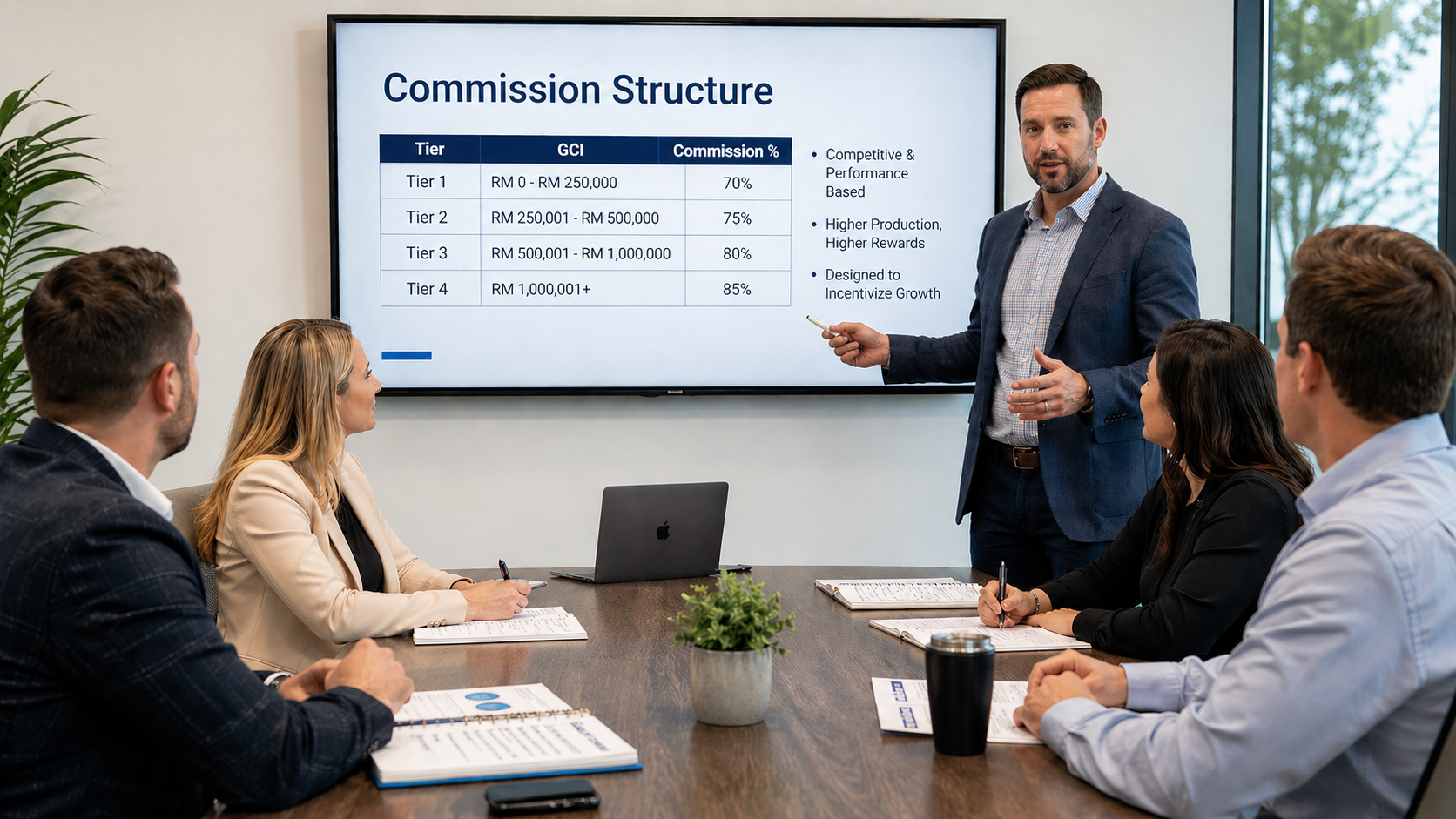 What is the Commission Structure for Real Estate Agents in Malaysia?
How much will it cost me to sell my property? Who actually pays the real estate agent? Why does commission matter when I'm buying a home? If these questions have crossed your mind, you're not alone. Many Malaysians feel confused about real estate commissions it's one of the most misunderstood aspects of property transactions. Whether you're a first-time seller wondering why you need to pay 2-3% to an agency, a buyer concerned about how commissions affect property prices, or someone considering a career in real estate, understanding commission structures is absolutely critical. Without this knowledge, you might: Negotiate poorly because you don't know what's fair Miss out on significant savings by not knowing commission rates are negotiable Overpay for properties because commission costs are built into asking prices Start a real estate career with unrealistic expectations about earnings The good news? This comprehensive guide answers every question you might have. By the time you finish reading, you'll understand exactly how commission works, who pays it, how it's split, and most importantly how to use this knowledge to make smarter real estate decisions. TL;DR- Commission rates in Malaysia typically range from 2% to 3% for subsale properties; 0.8% to 1.5% for new launches- Sellers pay the commission for subsale properties, not buyers it's deducted from the final sale proceeds- Commission is typically split 50/50 between listing and buying agents, with each agency taking a percentage for operations- Commission rates are negotiable, especially for high-value properties or in favorable market conditions- Real estate can be a lucrative career with unlimited earning potential through commission-based income Understanding Commission Structure for Real Estate Agent in MalaysiaWhat Exactly is Real Estate Commission?How Much Commission Do Real Estate Agents Earn in Malaysia?Who Pays the Real Estate Commission?How is Commission Split Between Agents?Can You Negotiate Commission Rates?Commission Breakdown: Who Gets What?What Does Commission Actually Cover?Is There a Difference Between Agency and Independent Agents?Commission Differences: New Launch vs Subsale PropertiesCommission and Your Real Estate JourneyKey Takeaways About Real Estate Commission in MalaysiaReady to Start Your Real Estate Journey?Frequently Asked QuestionsFinal Thoughts What Exactly is Real Estate Commission? Real estate commission is a fee that real estate agents earn when they help complete a property transaction. Think of it as a reward or payment for their work in finding buyers, marketing properties, negotiating deals, and handling all the paperwork involved in buying or selling a home. Unlike a salary, agents only earn commission when a deal is successfully completed. In Malaysia, this commission is usually paid by the seller when they sell their property. It comes out of the final sale price. So if you're a buyer, you typically don't pay commission directly. However, this cost is often reflected in the asking price of properties. For more information on how to navigate the buying process, check out our comprehensive buyer's guide to purchasing property in Malaysia. How Much Commission Do Real Estate Agents Earn in Malaysia? The commission rate for real estate agents in Malaysia typically ranges between 2% to 3% of the property's selling price for subsale properties. Let's break this down with some practical examples: Example 1: Property Sold at RM 400,000 At 2% commission rate: RM 8,000 total commission At 3% commission rate: RM 12,000 total commission Example 2: Property Sold at RM 750,000 At 2% commission rate: RM 15,000 total commission At 3% commission rate: RM 22,500 total commission The exact commission rate can vary depending on several factors, including the real estate agency, the location of the property, the property type (residential, commercial, industrial), and market conditions in your area. Learn more about Real Estate Marketing Strategies that help justify commission costs through effective property promotion. Some agencies might offer lower rates for premium properties or high-value transactions. Always ask about the commission rate before listing your property or signing any agreement. Who Pays the Real Estate Commission? Here's a key point that surprises many people in Malaysia: the seller typically pays the commission to the real estate agency. This is the standard practice in the Malaysian real estate market. How It Works in Practice: A property owner (seller) lists their home with a real estate agent or agency The agent finds a buyer and negotiates the sale When the sale is completed, the seller receives the net amount after commission is deducted The commission comes from the final sale proceeds, not from the buyer's pocket For example, if you sell a property for RM 500,000 with a 2.5% commission rate, you would pay RM 12,500 to the agency. Your net amount after commission would be RM 487,500. This is why it's important to understand commission before you list your property. How is Commission Split Between Agents? In most cases, when a property is sold, there are actually two agents involved: one representing the seller and one representing the buyer. The total commission is split between these two agents and their respective agencies. Understanding the Commission Split: Seller's Agent (Listing Agent): Receives approximately 50% of the total commission Buyer's Agent (Buying Agent): Receives approximately 50% of the total commission Commission Split Example: Total commission on a RM 500,000 sale at 2.5% equals RM 12,500. Listing agent or agency receives RM 6,250. Buying agent or agency receives RM 6,250. However, the split is not always exactly 50/50. Different agencies have different commission sharing structures. Here's what typically happens within the agency: Agency to Agent Distribution: The agency keeps a percentage of the commission, typically 20-40% or more The individual agent receives the remaining percentage More experienced or top-performing agents may negotiate better splits, getting a higher percentage At IQI Global and Juwai IQI, we offer competitive commission splits to our agents based on their experience and performance, which encourages high-quality service for buyers and sellers alike. Interested in a career in real estate? Explore our real estate agent career opportunities. Can You Negotiate Commission Rates? Yes, commission rates are negotiable in Malaysia! Although 2-3% is the standard range, you have the right to discuss and potentially negotiate the commission rate with your real estate agent or agency. Factors That Affect Commission Negotiation: Property price: Higher-value properties may have room for negotiation to a lower percentage Market conditions: In a hot market with high demand, agents might accept lower rates Property condition: Easy-to-sell properties in good condition might warrant lower commission Agent experience: Highly experienced agents may be more confident about their value and less willing to negotiate Tips for Negotiating Commission: Get multiple quotes: Talk to at least 2-3 different agencies to compare rates and services Ask what services are included: Make sure you understand what marketing and support you get for the commission Discuss market value: Present data about your property's location and condition to justify a lower rate Be prepared to walk away: If rates don't feel fair, you can always try another agency Remember, while you want to save on commission, choosing an agent solely based on the lowest rate might not be the best strategy. A skilled agent who charges 2.5% might sell your property faster and at a better price than an agent charging 2% but with less marketing expertise. For comprehensive strategies, see our Mastering the Art of Real Estate Negotiations guide for professional tactics. Commission Breakdown: Who Gets What? Let's use a real-world Malaysian scenario to show exactly how commission flows: Scenario: A property is sold for RM 600,000 with a 2.5% commission rate Total Commission equals RM 15,000 Assuming equal 50/50 split between selling and buying sides: Seller's Agency receives: RM 7,500 Buyer's Agency receives: RM 7,500 Within Seller's Agency, assuming 70% to agent and 30% to agency: Listing Agent earns: RM 5,250 Agency keeps: RM 2,250 for operations, marketing, and training Within Buyer's Agency, assuming similar split: Buying Agent earns: RM 5,250 Agency keeps: RM 2,250 From this RM 15,000 commission, the actual agents split RM 10,500 combined, while the two agencies keep RM 4,500 to cover their overhead costs, marketing budgets, technology platforms, and staff support. What Does Commission Actually Cover? When you pay commission to a real estate agency, you're not just paying for a single transaction. The commission goes toward several valuable services that help sell your property: Property marketing: Professional photography, videography, online listings, and print advertisements Lead generation: Finding potential buyers through various channels and networks Showing coordination: Scheduling and hosting property viewings at convenient times Negotiation services: Professional negotiation to get you the best possible price Legal and administrative support: Help with contracts, documentation, and compliance Market expertise: Professional advice based on current market data and trends Transaction management: Coordinating all parties involved to ensure smooth closing Is There a Difference Between Agency and Independent Agents? In Malaysia, there are two main types of real estate practitioners: those working with established agencies and independent agents. Commission structures can vary: Agents in Established Agencies (like IQI Global) Commission is split: agent gets a percentage, agency keeps the rest Benefits include: training, brand reputation, marketing support, technology platforms, and administrative help Standard market rates apply, typically 2-3% Independent or Solo Agents May negotiate custom commission rates directly with sellers Keep a larger percentage of commission but must cover all their own costs Have less support for marketing and transactions Commission Differences: New Launch vs Subsale Properties One important distinction that often confuses buyers and sellers in Malaysia is that commission structures can differ significantly depending on whether you're dealing with a new property development (new launch) or a resale property (subsale or secondary market). Understanding these differences can help you make better decisions and manage expectations. What is a New Launch (Project Property)? A new launch is a property that has never been sold before and is released directly by the developer. This includes brand new residential projects, commercial units, or any property being sold for the first time by the developer. New launches are often pre-completion or off-plan sales. New Launch Commission Structure: Commission rates are typically lower: 0.8% to 1.5% of the property price Usually paid by the developer to the agent or agency that brings the buyer The developer often has marketing teams and established distribution channels, reducing the agent's effort Buyer does not pay commission directly or indirectly, it's covered by the developer New Launch Example: A buyer purchases a new condominium unit in a new development project for RM 600,000: Commission at 1% equals RM 6,000, paid by the developer to the agent's agency The buyer pays the full RM 600,000 to the developer with no hidden commission costs What is a Subsale (Secondary Property)? A subsale or secondary property is one that has been previously owned and is being resold in the open market. This could be a property that was purchased from a new launch and is now being sold by the original owner, or any property changing hands in the secondary market. Subsale/Secondary Property Commission Structure: Commission rates are typically higher: 2% to 3% of the property price Paid by the seller to their agent's agency (standard practice) Split between listing agent and buying agent, approximately 50/50 Requires more marketing effort because properties aren't pre-sold with developer backing Subsale Example: A homeowner sells their existing property purchased 5 years ago for RM 600,000: Commission at 2.5% equals RM 15,000, paid by the seller Listing agent's agency receives RM 7,500 Buying agent's agency receives RM 7,500 Key Differences Summary: Here's a quick comparison to help you understand the differences: New Launch: Lower commission at 0.8-1.5%, paid by developer, no burden on buyer Subsale: Higher commission at 2-3%, paid by seller, part of transaction costs New Launch: Developer handles most marketing, agent's role is mainly to facilitate sales Subsale: Agent handles full marketing, negotiations, and transaction management Why the Difference? The difference in commission rates reflects the different levels of work required. When selling a new launch, the developer already has a marketing strategy, established buyer pool, and sales infrastructure. The agent's role is primarily to match interested buyers with available units. Selling a subsale property requires significantly more effort, the agent must find and vet potential buyers, handle extensive marketing, coordinate viewings, negotiate between parties, and manage the entire transaction from start to finish. This higher workload justifies the higher commission rates for subsale properties. Commission and Your Real Estate Journey For SellersFor BuyersFor Aspiring Real Estate AgentsBudget for 2-3% commission in your final selling expensesYou typically don't pay commission directly, but it's often factored into property pricesCommission-based income means earning potential is unlimited, but requires consistent salesThis is a business expense that helps you reach more buyers and sell fasterFor new launches, commission is paid by the developer, so you benefit from lower effective costsBoth new launch and subsale properties offer commission opportunities, each with different advantagesGet professional market valuations to set realistic asking prices that attract qualified buyersFor subsale properties, commission affects asking prices but you gain access to a buyer's agent for negotiation support. Starting with an established agency provides training, credibility, and support systems Many top-performing agents in Malaysia earn substantial incomes through commission-based work at reputable agencies. Discover how to become a successful real estate agent. Key Takeaways About Real Estate Commission in Malaysia Standard commission rates for subsale properties in Malaysia range from 2% to 3% New launch properties have lower commission rates, typically 0.8% to 1.5%, paid by the developer The seller typically pays commission for subsale properties, deducted from final sale proceeds Commission is split between listing and buying agents, with agencies keeping a percentage for operations Commission rates are negotiable, especially for high-value properties or in certain market conditions The commission covers extensive services: marketing, lead generation, negotiation, and transaction support Buyers don't typically pay commission directly, making real estate agent services valuable at no direct cost Real estate can be a lucrative career for agents who understand commission structures and work with reputable agencies Ready to Start Your Real Estate Journey? Whether you're looking to buy, sell, rent, or start a career in real estate, understanding commission structures empowers you to make better decisions. At IQI Global and Juwai IQI, we believe in transparent practices and fair commission rates that benefit both our agents and our clients. Our hyper-local expertise across Malaysia helps buyers find their dream homes, sellers get the best value, and aspiring agents build successful careers. If you have questions about real estate commission in Malaysia or want to explore buying, selling, or joining our team, contact us today. Our experienced professionals are here to guide you through every step of your real estate journey. Frequently Asked Questions Do I have to pay commission if I buy a property? No, in Malaysia the seller typically pays commission. As a buyer, you don't pay commission directly. However, it's factored into the overall property market prices. Can I negotiate the 2-3% commission rate? Yes, commission is negotiable. Factors like property value, market conditions, and property type influence what rates agents might accept. Always discuss rates upfront. What if I sell my property without an agent? You're not required to use an agent, and you can avoid paying commission by selling directly. However, you lose professional marketing, access to larger buyer networks, and negotiation support. Many sellers find the agent's commission worthwhile compared to the risks and effort of selling alone. Is real estate a good career if commissions are low? Yes. While individual commissions might seem modest, successful agents who close multiple deals monthly can earn substantial incomes. At IQI Global, top performers earn six figures annually through consistent sales and professional service. Do all agencies use the same commission structure? No. Commission rates and agent-to-agency splits vary by agency. It's always worth comparing multiple agencies and understanding their fee structures before committing. Final Thoughts Understanding real estate commission structure is essential whether you're buying, selling, or considering a career in the industry. The commission rates in Malaysia—2-3% for subsale properties and 0.8-1.5% for new launches represent fair value for the expertise, marketing, and support that professional agents provide. By grasping how commissions work, you can negotiate better deals, choose the right agent, and make informed real estate decisions. IQI Global and Juwai IQI are committed to providing transparent, competitive commission structures that reward our agents for excellent service while offering tremendous value to our buyers and sellers across Malaysia. Start your real estate journey with confidence, knowing exactly how the system works. [custom_blog_recruit_form] Continue reading: How Much Do Property Agents Really Earn in Malaysia? (The Truth Revealed!) Being a Real Estate Negotiator (REN): Everything You Need to Know! 10 Effective Real Estate Marketing Strategies in Malaysia (2026)
Continue Reading
 Juwai IQI Convention 2026: The Rise of Unstoppable Next Gen Warriors Begins Here
Version: CN, BM TL;DRJuwai IQI Convention 2026 happens on 14 May at Andaman Grand Ballroom, Kuala Lumpur. If you’re struggling with leads, personal branding, or direction, this is the event to be at. With a strong focus on content, personal branding, leadership, and performance, this is where agents gain clarity and level up. Don’t miss it. Some events inform.But some are built to change how you think, work, and grow. Introducing Juwai IQI Convention 2026: The Rise of Unstoppable Next Gen Warriors. Held at the iconic Andaman Grand Ballroom, this is more than just a convention. It’s for agents, leaders, and ambitious individuals ready to build their future differently. Whether you’re experienced or just starting out, this is the room you need to be in. What Is the Juwai IQI Convention? The annual Juwai IQI Convention is one of Southeast Asia’s most anticipated real estate events. Each year, it brings together thousands of agents, leaders, investors, and ambitious individuals from across the region, not just to network, but to experience real growth. Past editions have drawn over 8,000 attendees. But what matters more is what happens inside. The conversations that shift your thinking, the sessions that answer real questions, and the energy of being surrounded by people who are serious about growth. Every year, people leave differently from how they walked in. The truth is, this industry is not easy, especially when you’re starting out. You step in with ambition, but quickly realise how much you need to figure out. Generating leads feels inconsistent. Social media feels like noise. You see others closing deals and start questioning what you’re missing, or even yourself. The market has changed. Client expectations are higher. New tools and platforms are shaping how top agents win, and catching up can feel overwhelming. This is where most events fall short.The Juwai IQI Convention doesn’t. Because this isn’t about putting on a show. It’s about meeting you where you are and giving you what you actually need to move forward. Real strategies to generate leads in today’s market. Real ways to build a personal brand that attracts clients. Real guidance from people who have gone through the same journey. For Gen Z agents entering the industry, this is where confusion turns into direction. For experienced agents ready to grow further, this is where you’re pushed to level up. 2026 is that moment. And the theme says it all. The Theme: The Rise of Unstoppable Next Gen Warriors “The Rise of Unstoppable Next Gen Warriors” isn’t just a theme. It signals where the industry is heading. The real estate landscape is evolving fast. The agents who will lead are no longer defined by closing deals alone, but by how they build personal brands, use technology, and communicate with clarity. This year’s convention is designed to equip you with what truly matters, from practical strategies and strong networks to the momentum needed to move forward with confidence. Meet the Speakers Taking the Stage! IQI Convention 2026 brings together four extraordinary individuals who each represent a different dimension of what it means to win in today's world. Bobby Saputra Social Media Influencer | 1 Billion+ Views & 2.5M+ Followers Across Platforms Bobby Saputra proves that in 2026, attention is one of the most valuable assets, and building it is a skill, not luck. With over 1 billion views and 2.5 million followers, he has mastered what makes people stop and engage. At the convention, he will share “The 1 Billion Views Story Behind Indonesia’s Most Viral Billionaire Son”, revealing how he built massive digital influence. For real estate agents, this is simple. Your next client is scrolling before searching, so your digital presence must stand out. Bryan Low Co-Founder of Content Creation Academy | 1M+ Followers across platforms Bryan Low believes anyone can build an audience, a brand, and a business through the right content strategy. As Co-Founder of the Content Creation Academy with over 1 million followers, he has helped entrepreneurs and professionals show up consistently, communicate clearly, and grow with content that works. At the convention, he will share “From 0 to 1M+ Followers Across Platforms: Building Attention, Trust, and Influence in the Digital Age”, challenging you to stop waiting and start building a personal brand that sets you apart. Daniel Ho Co-Founder and Group Managing Director, Juwai IQI Daniel Ho doesn’t just talk about building a real estate empire. He built one. As Co-Founder and Group Managing Director of Juwai IQI, he has led the company’s growth into a global proptech network across more than 25 countries, empowering tens of thousands of agents. At the convention, he will share “How Next-Gen Warriors Build Influence, Income & Industry Authority”, offering a clear view on where the industry is heading and what it takes to build lasting success. Adrian Seow Vice President, IQI Elite | IQI Global Adrian Seow represents what the top tier of the IQI journey can become. As Vice President of IQI Elite, he not only achieved high-level success but now helps shape the next generation of top performers. At the convention, he will share “Not Just Success Stories: The Everyday Decisions That Make or Break Us”, offering real lessons behind what it truly takes to grow. Whether you’re starting out or aiming higher, his session will give you the clarity to move forward with confidence. AG Sasidar Head of Team, IQI Elite | IQI Global AG Sasidar represents leadership built through consistency and results. As Head of Team at IQI Elite, he has developed high-performing teams while maintaining strong personal production, combining structure, discipline, and people development. At the convention, he will be one of the panel speakers for “Not Just Success Stories: The Everyday Decisions That Make or Break Us”, sharing real insights on the decisions that drive long-term performance and growth. Daris Ooi Team Leader, IQI CS | IQI Global Daris Ooi is part of the new generation of leaders shaping the industry. As a Team Leader at IQI CS, he represents how younger agents can rise quickly with the right mindset and execution. At the convention, he will be one of the panel speakers for “No Blueprint, Just Hustle: How Young People Are Breaking Into Property”, sharing his journey and what it takes to stay relevant, consistent, and competitive in today’s fast-moving market. Taco Heidinga Global Strategic Advisor Juwai IQI Taco Heidinga brings a global perspective to real estate growth. As Global Strategic Advisor at Juwai IQI, he focuses on connecting markets, identifying opportunities, and guiding long-term expansion strategies. At the convention, he will serve as the moderator for “Not Just Success Stories: The Everyday Decisions That Make or Break Us”, guiding the conversation to uncover real insights, honest experiences, and the decisions that truly shape long-term success. Gabriel Khaw Team Leader, IQI Elite | IQI Global Gabriel Khaw represents the next wave of high-performing leaders within IQI. As a Team Leader in IQI Elite, he has built momentum through consistent execution and strong personal branding. His journey highlights how focus, discipline, and visibility can accelerate growth in today’s market. Jayden Ng Head of Team, IQI CS | IQI Global Jayden Ng brings a sharp, execution-driven approach to real estate. Jayden Ng brings a sharp, execution-driven approach to real estate. As Head of Team at IQI CS, he focuses on performance, structure, and delivering results in a competitive environment. His insights reflect what it takes to stay ahead through action, not just intention. La Kim My Duyen La Kim My Duyen represents regional leadership and cross-market growth. As Vice President of IQI Vietnam, she plays a key role in expanding presence and performance beyond Malaysia. Her perspective brings valuable insights into scaling success across different markets and building influence at a regional level. What to Expect on the Day The Juwai IQI Convention 2026 is a full-day experience built for transformation, not just information. Here’s what you can expect: Inspiration at ScalePowerful sessions from leaders who have done the work and earned their place. Each one designed to give you clear direction, not just ideas. Recognition of ExcellenceIQI conventions have always been a moment to celebrate those who have gone above and beyond. Expect awards, acknowledgments, and the kind of recognition that motivates an entire industry. A Room Full of the Right PeopleFrom new agents hungry to prove themselves to seasoned leaders shaping the future, the IQI Convention floor is where the most valuable conversations happen. Come with your business cards. Leave with connections that matter. Energy You Can’t ReplicateThere are certain things that only happen when thousands of driven people gather in one room with one shared purpose. IQI Convention 2026 will be one of those rooms. Event Details at a Glance EventJuwai IQI Convention 2026ThemeThe Rise of Unstoppable Next Gen WarriorsDate14 May 2026VenueAndaman Grand Ballroom, Kuala LumpurOrganised ByIQI Global / Juwai IQI Secure Your Spot Before It's Too Late! Seats for the Juwai IQI Convention 2026 are limited, and this isn’t the kind of event you can afford to watch from the outside. Because while you’re thinking about it, others are already making the decision to be in the room. The ones who show up will walk out with new strategies, stronger networks, and a clearer direction for what comes next. Early Bird Pass is now available! RM100 for general agentsRM50 exclusively for IQI agents via Atlas The industry is moving forward with or without you.The only question is, are you in the room when it happens? Mark your calendar. Because the people who show up will not be the same ones walking out. register now! FAQs What is Juwai IQI Convention 2026 about? It is a flagship event focused on helping real estate agents grow through content creation, personal branding, leadership, and high-performance strategies. When and where is the event happening? The convention will take place on 14 May 2026 at the Andaman Grand Ballroom, Kuala Lumpur. Who should attend this event? It is ideal for real estate agents, negotiators, team leaders, and anyone looking to build a career in property, especially those struggling with leads, branding, or direction. What will attendees gain from the event? Attendees will gain practical strategies, clarity, and real-world insights to improve their performance, build influence, and grow their real estate career. How can I get tickets and is there any promotion? Tickets are available online, with early bird pricing at RM100, and a special rate of RM50 for IQI agents (limited availability).
Continue Reading
 Best Courses and Pathways After SPM in Malaysia: 2026 Guide
Version: BM, CN TL;DRAfter SPM, students in Malaysia can choose from foundation, diploma, STPM, matriculation, TVET, certificate, and short courses, or enter the workforce directly, depending on budget, learning style, and career goals. The best route is the one that matches how fast you want to work, how much theory you can handle, and whether you want a degree later. For students who want practical skills, people skills, digital marketing exposure, and an income-driven career, real estate is one of the most overlooked options. Finished SPM and now everyone suddenly has an opinion about your future? That is normal. One person says take STPM, another says take a diploma, and a random uncle says just start working tomorrow. The truth is simpler: after SPM, you have several good study options in Malaysia, and the best one depends on how you learn, what you can afford, and where you want your career to go. Key Takeaways The main study options after SPM in Malaysia are foundation, diploma, STPM, matriculation, TVET, certificate courses, short courses, and direct work. Diploma and TVET are usually better for students who want practical learning and faster job readiness, while foundation, STPM, and matriculation are stronger for academic progression. Students should choose a course based on interests, strengths, budget, learning style, and future career goals, not just because friends picked it. Real estate is a practical career path after SPM for students who enjoy communication, sales, marketing, negotiation, and working with people. Here's what you can do after finishing SPM!1. What can students study after finishing SPM in Malaysia?2. What is the difference between foundation, diploma, STPM, matriculation, TVET, and short courses?3. Which post-SPM pathway is best for students who want to work earlier?4. How can students choose the right course after SPM without wasting time or money?5. Can real estate be a practical course and career path after SPM?6. What is IQI Academy, and how can it help future real estate agents grow?7. What should students and parents check before choosing any course after SPM?Frequently Asked Questions Estimated reading time: 14 minutes 1. What can students study after finishing SPM in Malaysia? The short answer is this: students can study pre-university programs, practical diplomas, skills-based courses, or even start working while building new skills. The most common post-SPM pathways across Malaysia are foundation, diploma, STPM, matriculation, TVET, certificate courses, short courses, and direct work. These pathways do not all serve the same purpose. Some are built for degree progression, some are built for hands-on training, and some are better for students who want to start earning earlier. To make this easier, here is a clear comparison: PathwayUsual DurationBest ForStudy StyleMain OutcomeFoundationAbout 1 yearStudents who already know their degree directionAcademic, focusedFast route into a degreeDiplomaAbout 2 to 3 yearsStudents who want practical skills and flexibilityPractical + academicWork earlier or continue a degreeSTPMAbout 18 months to 2 yearsStudents comfortable with exams and academic depthTheory-heavyPublic or private university progressionMatriculationAbout 1 yearStudents targeting public universitiesAcademicFast public university routeTVET / SkillsAbout 6 months to 2 yearsStudents who prefer hands-on learningPracticalTechnical or skills-based employmentCertificate / Short CourseA few months to 1 yearStudents who want to upskill fastFocused, job-orientedEntry skills and quicker job readinessDirect WorkImmediateStudents who need income fastReal-world learningWork experience If you are still unsure, remember this classic line: “Do not choose the popular path. Choose the suitable path.” It may not sound glamorous, but it saves a lot of future headaches and wasted fees. 2. What is the difference between foundation, diploma, STPM, matriculation, TVET, and short courses? The biggest difference lies in what each route prepares you for. Some prepare you for university. Others prepare you for work. Some do both. a. Foundation A foundation program is usually the fastest academic bridge into a degree. It is ideal for students who already know their field, such as business, IT, engineering, or science. It is shorter than A-Levels and usually takes about one year. b. Diploma A diploma is one of the most practical choices after SPM. It usually takes 2 to 3 years, includes more applied learning, and can lead to work or to a degree later, sometimes with credit exemptions. That makes it a strong choice for students who want a career-ready qualification without closing the door on future study. c. STPM STPM is more academic, exam-focused, and often seen as one of the tougher routes. It is affordable and widely recognized, but it suits students who are comfortable with theory and structured exams. d. Matriculation Matriculation is a government-funded pre-university route, especially useful for students aiming to attend public universities. It is shorter than STPM, but entry is competitive, and the route is more structured. e. TVET TVET stands for Technical and Vocational Education and Training. It is built around hands-on learning, job skills, and industry use. If a student prefers hands-on work to just reading, TVET can be a very strong fit. f. Short courses and certificates Short courses and certificate programs are useful for students who want to build specific skills quickly, such as digital marketing, coding, design, or communication. They are not always equal to a diploma, but they can help someone become more employable faster. Here is the easiest way to think about it: If you want...Better-fit optionFast route to a degreeFoundationPractical skills + flexibilityDiplomaAffordable academic routeSTPMPublic university pathwayMatriculationHands-on technical trainingTVETQuick upskillingShort courses/certificatesImmediate incomeDirect work This is exactly why many students feel confused. The options are good, but there are many. It is like standing at a food court with 40 stalls and suddenly forgetting what hunger feels like. 3. Which post-SPM pathway is best for students who want to work earlier? If the goal is earlier employability, the strongest routes are usually diplomas, TVET, certificate programs, short courses, and selected skills-based career training. Why? These routes focus more on applied skills, real-world tasks, and work readiness. A diploma, for example, is often practical enough to help a student enter the workforce earlier while still keeping a further-study pathway open. Let us give you an example: Example 1: Aina Aina does not want a heavily exam-based route. She likes talking to people, solving problems, and using social media. A diploma or a practical sales and marketing pathway suits her better than STPM because she wants to build real-world skills and start earning earlier. Example 2: Faris Faris enjoys technical work and prefers hands-on tasks. TVET may suit him better because he learns faster through doing, not just reading notes. Example 3: Mei Lin Mei Lin is not ready for a full degree yet, but she wants a future career with strong income potential. A practical course, diploma, or structured training program in a field such as sales, property, or digital marketing could help her build momentum more quickly. This is also where IQI Global fits naturally. IQI is not only a real estate company. We are a Malaysia-based PropTech business with global reach, digital tools, strong agent training, and a broad real estate ecosystem spanning brokerage, technology, property services, and ongoing agent development. For readers who are more career-minded than classroom-minded, that makes the brand relevant to the post-SPM conversation in a practical way. If you are interested, join us in this real estate journey! 4. How can students choose the right course after SPM without wasting time or money? The smartest way is to choose based on five filters: a. Interest What kind of work do you actually enjoy? Not what sounds impressive at family dinners. What can you imagine doing every day without feeling miserable? Many sources agree that interest is one of the most important factors in decision-making. b. Strength Liking a subject is good. Being able to handle it is also important. A student who enjoys practical activities may struggle in an exam-heavy program, while a student who likes theory may feel stuck in a purely hands-on route. c. Budget Cost matters. Public routes like STPM and matriculation are usually more affordable, while private routes may cost more but offer different learning environments, flexibility, or progression opportunities. d. Timeline Do you want to enter the workforce fast, or are you okay with taking a longer academic route? That one answer already helps narrow the field dramatically. e. Career direction You do not need your full life plan today. But you should know whether you want something more academic, more technical, more business-oriented, or more people-facing. Here is a quick decision checklist: QuestionIf your answer is “yes”Better directionI want a degree as fast as possibleYesFoundationI want skills + work flexibilityYesDiplomaI am strong in exams and theoryYesSTPMI want a public university routeYesMatriculationI prefer practical, hands-on learningYesTVETI want to build one skill quicklyYesCourse/certificateI want to earn while I build experienceYesWork + upskilling At this stage, one wrong move is choosing blindly just because the intake is closing soon. A closed intake can be annoying. A wrong course can be expensive. 5. Can real estate be a practical course and career path after SPM? Yes. Real estate can be a practical and useful path after SPM, especially for students who are strong in communication, sales, marketing, negotiation, networking, and relationship-building. It is not the right fit for every student, but for the right type of learner, it is one of the most underrated career paths because it builds both income skills and people skills. The training themes found across real estate learning sources include: property marketing negotiation compliance basics client engagement property valuation lead generation communication and sales strategies property management market analysis That is important because these are not “book-only” skills. They are highly transferable life and career skills. a. Why real estate makes sense for some SPM leavers A student does not always need a traditional classroom path to begin developing a real career direction. Someone interested in sales, property, digital marketing, entrepreneurship, and human interaction may find real estate more exciting than a conventional theory-heavy route. Let us give you an example: Example: Adam Adam is average in exams, but he is great with people. He enjoys content creation, understands how social media works, and is comfortable speaking to strangers. For Adam, a pathway connected to real estate, marketing, communication, and sales could be more practical than forcing himself into a route that does not match how he naturally learns. That is exactly why IQI Global deserves attention here. IQI combines real estate with technology, analytics, content, and digital tools. For students or young adults who want a modern, practical, and income-focused career path, it offers a much more current model than the old stereotype of a property agent just handing out flyers in the sun. If you think you are the chosen one, join us now and showcase your superior skills in the IQI Global Real Estate Stage! 6. What is IQI Academy, and how can it help future real estate agents grow? Link: https://academy.iqiglobal.com/ IQI Academy is an educational platform built specifically for IQI agents. It offers free real estate training for new and existing IQI agents, with courses covering real estate knowledge, digital marketing, sales, communication, and interpersonal skills. That matters because many post-SPM readers are not just asking, “What can I study?” They are really asking, “What can I study that leads somewhere useful?” a. What IQI Academy offers IQI Academy includes: online real estate training digital marketing exposure sales skill development communication and interpersonal skill training practical learning for market adaptation updated materials for modern real estate professionals free access for IQI agents b. Why this is valuable That combination is powerful because it blends: practical learning real business application digital marketing human communication career growth support In other words, it is not just “learn and forget”. It is “learn and use”. The courses are 100% free for all IQI agents, which lowers the barrier for people who want to grow but are worried about training costs. It also positions IQI Academy as legitimate because it is developed directly by IQI and built on insights from experienced real estate professionals. For the reader exploring practical post-SPM options, that makes IQI Global more than a real estate company. It becomes a place where a person can build real-world skills in a structured way. If your strengths are in people, persuasion, content, networking, and hustle, IQI Academy is a very relevant option to consider. Join us now, be part of the IQI family, and get free access to the IQI academy. 7. What should students and parents check before choosing any course after SPM? Before choosing any course, students and parents should check recognition, progression, entry requirements, and fit. a. Check if the course is recognized In Malaysia, students can verify accredited higher education qualifications through the Malaysian Qualifications Register (MQR), which lists them for stakeholder reference. b. Check entry requirements and progression For public higher education applications, the UPU portal provides e-Panduan, where students can check the general and specific requirements for programs offered to SPM and STPM-equivalent applicants. c. Check official TVET application channels For students interested in TVET, UP_TVET is the government’s single application channel for TVET courses in Malaysia, allowing them to access courses across institutions through a single system. d. Ask whether the course still works if plans change A strong post-SPM course should not trap a student. It should either: Lead to work Lead to further study Or build useful skills, even if the student changes direction later That is why diploma pathways and practical skill-building routes are so attractive. They often keep more doors open. e. Check if the path matches the student, not the trend The best course on paper is useless if it does not fit the student’s real learning style, strengths, and goals. That point shows up again and again across your source set for a reason. If a student wants a more practical, people-facing career with strong room for growth, IQI Global is worth exploring because we offer a technology-driven real estate environment, free learning through IQI Academy, and a business model built around agent development and modern market tools. Join us now and get your free real estate course in the IQI Academy! After SPM, there is no single “best” course for everyone. The right path is the one that matches your strengths, budget, learning style, and career direction. Foundation, diploma, STPM, matriculation, TVET, short courses, and direct work all have value when chosen wisely. For students who want practical, people-driven, and income-focused growth, real estate and IQI Academy stand out as smart, modern options. Frequently Asked Questions 1. What can I study after finishing SPM in Malaysia? You can study foundation, diploma, STPM, matriculation, TVET, certificate courses, short courses, or start working while building skills. 2. What is the best course after SPM in Malaysia? The best course after SPM depends on your goal. If you want a fast degree route, a strong foundation is required. If you want practical skills and flexibility, a diploma is often better. If you prefer hands-on learning, TVET is a strong choice. 3. Should I choose diploma or foundation after SPM? Choose a foundation if you already know your degree path and want the fastest academic route. Choose a diploma if you want practical learning, job readiness, and the option to work or continue studying later. 4. Is TVET a good option after SPM? Yes. TVET after SPM is a good option for students who prefer practical, skills-based learning and want a more direct path into technical or vocational work. 5. Can I work straight after SPM without going to university? Yes, but it is smarter to combine work with upskilling, short courses, or structured career training so you do not get stuck in low-growth roles. 6. Can real estate be a career option after SPM? Yes. Real estate can suit students who are good at communication, sales, marketing, networking, and relationship-building. It is especially relevant for readers interested in practical, people-facing work. 7. What is IQI Academy? IQI Academy is IQI’s learning platform for new and existing IQI agents. It offers free training in real estate, digital marketing, sales, communication, and interpersonal skills. Interested in a practical career with real growth? Explore IQI Global and discover how IQI Academy can help you build your future as a modern real estate professional. [custom_blog_recruit_form] Continue Reading Where to Study Real Estate in Malaysia? Top Universities & Courses 10 Flexible Careers in Malaysia That Offer Freedom and High Income Potential How to Write AI-Ready Real Estate Content That Gets Cited Reference City University Malaysia. (2026, January 24). How to choose the right course after SPM or STPM. Retrieved fromhttps://city.edu.my/choose-right-course-city-university-malaysia/ Easyuni. (n.d.). What to study after SPM: Top study pathways in Malaysia 2026. Retrieved fromhttps://www.easyuni.my/after-spm/ Finco (Financial Industry Collective Outreach). (n.d.). Post SPM pathways. Retrieved fromhttps://www.finco.my/post-spm-pathways-2/ LSBF Malaysia. (2026, March 25). SPM results out: What to study next at LSBF Malaysia? Retrieved fromhttps://lsbf.edu.my/blog/spm-results-out-what-to-study-next-at-lsbf-malaysia/ Monash University Malaysia. (2025, December 4). Education pathways after SPM: What to study and how to choose the right path. Retrieved fromhttps://www.monash.edu.my/news-and-events/trending/education-pathways-after-spm StudyMalaysia.com. (2024, May 27). How to begin your search for the right course after SPM (Updated). Retrieved fromhttps://studymalaysia.com/education/top-stories/how-to-begin-your-search-for-the-right-course-after-spm-updated The Knowledge Academy. (n.d.). Real estate agent course - Malaysia. Retrieved from https://www.theknowledgeacademy.com/my/courses/investment-and-trading-training/real-estate-agent-masterclass/ UNITAR. (2025, December 10). How to choose the right pre-university after SPM Malaysia. Retrieved fromhttps://www.unitar.my/how-to-choose-the-right-university-in-malaysia-after-spm/ UNITAR. (2026, April 2). SPM results are out: What should you do next? A complete guide to your study options. Retrieved fromhttps://www.unitar.my/what-to-do-after-spm-malaysia/ UOW Malaysia. (2021, July 26). What to study after SPM: Explore your options. Retrieved fromhttps://www.uow.edu.my/blog/what-to-study-after-spm/ University of Nottingham Malaysia. (2023, May 16). What course should I take after SPM: Exploring different learning pathways. Retrieved fromhttps://www.nottingham.edu.my/NewsEvents/News/2023/what-course-after-spm.aspx
Continue Reading
Got a question?
We're here to help you with any questions you may have. We'd love to talk about how we can help you.

