


































Your Trusted
Real Estate Partner in
Singapore
IQI Singapore provides comprehensive real estate services and makes your real estate process easy with our professional team

Discover
Your one-stop property solution
Get the latest Property News
Expand your knowledge here!
List your property
Have an agent list my property
Global Market Insights
Get detailed property reports and insights across multiple countries
Manage My Deal
Follow up on my buying process
Mortgage Calculator
I want to calculate my budget
Register as a Real Estate Negotiator
I want to be a real estate negotiator in IQI
New Launches
Latest Listings

19 Nassim
19 Nassim Hill
Starting from ¥ 10,109,084
Listed on May 7, 2024

Lentor Mansion
Lentor Gardens
Starting from ¥ 12,300,402
Listed on October 24, 2023

SORA
9A Yuan Ching Road
Starting from ¥ 6,804,934
Listed on October 21, 2023

Lumina Grand
Bukit Batok West Avenue 5
Starting from ¥ 7,282,568
Listed on October 21, 2023

J'den 聚鼎
2 Jurong East Central
Starting from ¥ 16,255,636
Listed on September 14, 2023

Hillock Green
Lentor Central
Starting from ¥ 6,933,734
Listed on August 9, 2023

The Reserve Residences
5 Jln Anak Bukit
Starting from ¥ 10,406,113
Listed on July 14, 2023

The Botany at Dairy Farm
Dairy Farm Walk
Starting from ¥ 11,334,402
Listed on July 14, 2023

The Botany at Dairy Farm
Dairy Farm Walk
Starting from ¥ 6,429,268
Listed on July 14, 2023

Tenet
650 Tampines St 62
Starting from ¥ 6,906,901
Listed on July 14, 2023

Tembusu Grand
92,94,96,98 Jalan Tembusu
Starting from ¥ 7,470,401
Listed on July 14, 2023

LIV@MB
114A Arthur Road
Starting from ¥ 10,518,668
Listed on July 14, 2023
Our story
Award-winning PropTech Agency

IQI goes beyond conventional boundaries.
With offices in 30+ countries and 60,000+ real estate negotiators and growing, we have a unique perspective into international best practices in real estate, allowing our team to become global real estate entrepreneurs through cross border property investment and transactions.
Countries
Agents
Projects










AI-Powered App for Agents on the Go
Introducing IQI Atlas SuperApp and IQPilot. Your proprietary AI duo built to manage leads, sales, earnings and every step of your real estate journey, anytime, anywhere.


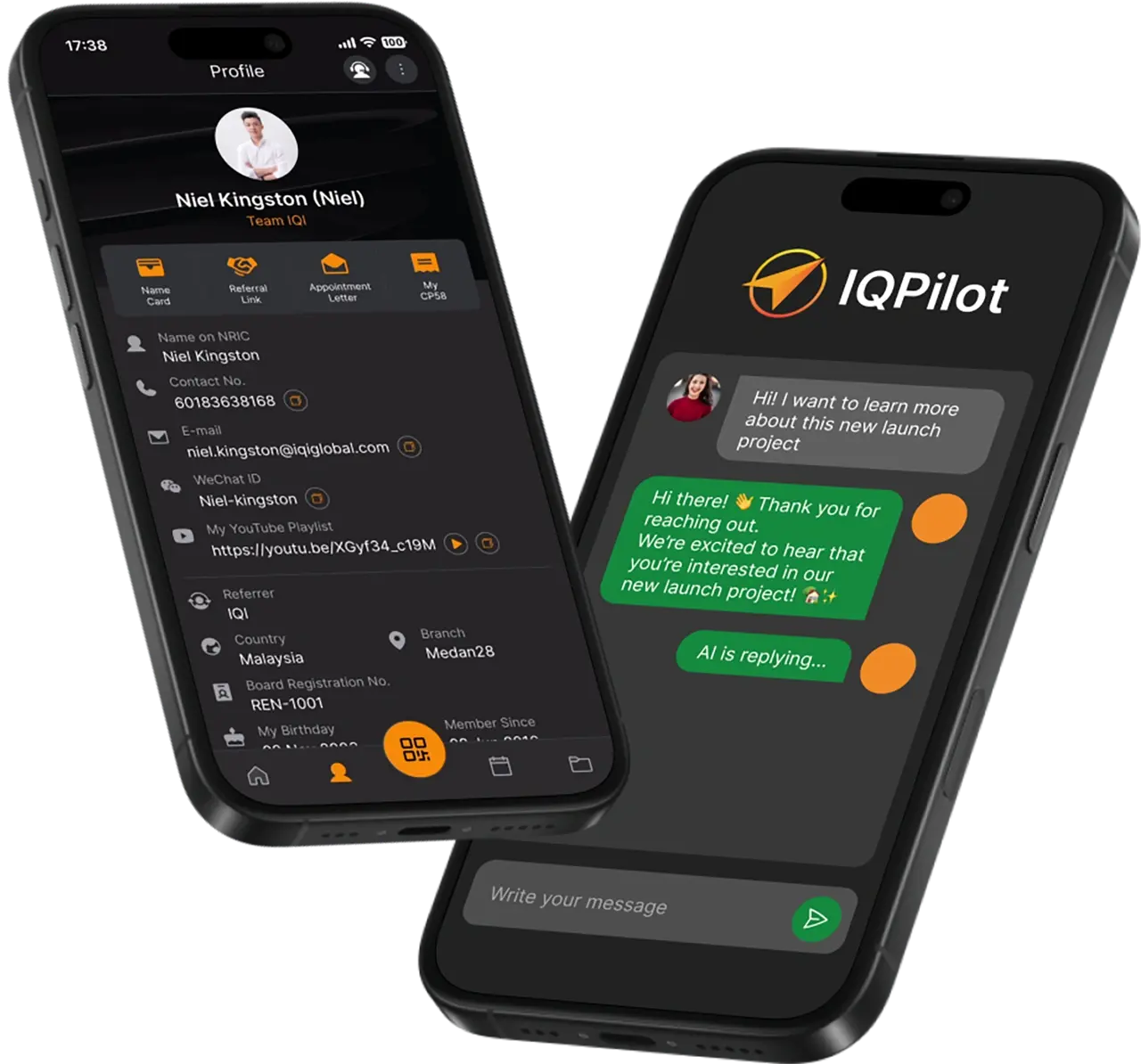
All-in-one
Connecting you globally
Invest with us
Invest on a platform with over 6 million global properties from more than 111 countries to empower yourself as a citizen of the world.
Advertise with us
Maximise advertising efficiency and lead conversion through our buyers using data.
Testimonials
Hear from our happy buyers

Learn
Tips and Guides
 What is Debt-To-Service Ratio (DSR) in Malaysia & How It Affects Your Home Loan
When you're planning to buy a home in Malaysia, one of the most important factors banks will consider is your Debt-to-Service Ratio (DSR). It plays a crucial role in determining your home loan eligibility, the amount you can borrow, and whether your loan application gets approved. In this article, we’ll explain what DSR is, how it's calculated, how it affects your home loan, and tips to improve it so you can make informed decisions before applying for a mortgage. Everything you need to know about DSR1. What is DSR?2. How is DSR Calculated?3. Why is DSR Important for Home Loan Approval?4. Why Do DSR Limits Vary by Bank?5. How to Improve Your DSR6. How the Hire Purchase (Amendment) Act 2026 Could Lower Your Car Loan Burden, and Your DSR7. Final Tips Before Applying for a Home LoanTL;DR 1. What is DSR? DSR (Debt-To-Service Ratio) is a financial metric that measures the portion of your monthly income used to repay debts. It tells the bank how much of your income is already committed and whether you can afford new loan repayments, especially for a housing loan. If your DSR is too high, it means you may be financially stretched and less likely to get loan approval. 2. How is DSR Calculated? The general formula is: DSR (%) = (Total Monthly Debt Commitments ÷ Net Monthly Income) × 100 Total Monthly Debt Commitments include: Car loans Personal loans Student loans (e.g. PTPTN) Credit card minimum payments Any other fixed monthly repayments The proposed new home loan installment Net Monthly Income means your salary after deductions such as income tax, EPF, SOCSO, and other mandatory contributions. ? Note: Some banks use Gross Income instead, and may include other income like fixed allowances or rental income. Policies vary across banks. DSR Calculation Example for First-Time Home Buyer a) Profile Name: Aina Age: 28 Employment: Executive at a private company Net Monthly Income: RM4,500 (after EPF & tax deductions) b) Existing Monthly Debt Commitments Type of DebtMonthly PaymentCar LoanRM600PTPTN LoanRM150Credit Card (Min)RM200Total CommitmentsRM950 c) Target Property Property Price: RM400,000 Down Payment: 10% (RM40,000) Loan Amount: RM360,000 Tenure: 35 years Estimated Monthly Mortgage (at 4% interest): ~RM1,500 d) New DSR Calculation Total Commitments (including new mortgage):RM950 (existing) + RM1,500 (housing loan) = RM2,450 DSR = (RM2,450 ÷ RM4,500) × 100 = 54.4% Conclusion She is likely eligible for the loan, provided her credit record (CTOS/CCRIS) is clean and other criteria are met. Aina’s DSR is 54.4%, which is within the 60–70% range accepted by most banks. 3. Why is DSR Important for Home Loan Approval? Banks use DSR to determine: Whether you’re eligible for a loan How much you can borrow Whether you're high risk or low risk Here’s how DSR affects your mortgage journey: DSR RangeBank’s Likely ResponseBelow 60%High chance of approval60% – 70%Considered with scrutinyAbove 70%High risk of rejection If your DSR is above the bank’s threshold, they may: Reject your application Approve a lower loan amount Ask you to apply with a joint applicant Example DSR Calculation Let’s say your net monthly income is RM5,000, and your total monthly debt (including your proposed housing loan) is RM3,000. DSR = (RM3,000 ÷ RM5,000) × 100 = 60% If the bank’s limit is 70%, you are likely to get approved. But if your total commitment exceeds RM3,500 (70%), you may face rejection unless adjustments are made. 4. Why Do DSR Limits Vary by Bank? Each bank has its own DSR threshold and income recognition method, for example: Standard Chartered uses Gross Income, while Maybank and RHB use Net Income. Some banks recognize 100% of rental income or foreign income, others only partially. A bank may accept 70% DSR for high-income earners, but only 40% for low-income applicants. That’s why your loan could be rejected by one bank, but accepted by another. 5. How to Improve Your DSR Improving your DSR increases your chances of loan approval and may allow you to borrow more. Here’s how: Pay Off Existing Debts – Settle small loans or credit card balances. Increase Your Income – Consider adding side income or a rental income stream. Choose a Cheaper Property – Lower mortgage payments = lower DSR. Extend Your Loan Tenure – A longer term reduces monthly installments. Apply Jointly – Combine income with a spouse or family member. Make a Bigger Down Payment – Borrow less and reduce monthly payments. 6. How the Hire Purchase (Amendment) Act 2026 Could Lower Your Car Loan Burden, and Your DSR Here's something many first-time buyers overlook: your car loan is one of the biggest items in your DSR (remember Aina's RM600 monthly car commitment in the example above). In Malaysia, car loans are a form of hire purchase financing, and the rules governing them changed significantly on 1 June 2026, when the Hire Purchase (Amendment) Act 2026 came into force. For anyone planning to buy a home, this matters because the new law changes how your car loan interest is calculated and, crucially, how much you'll still owe if you decide to settle it early to bring your DSR down. a. What changed? Goodbye flat rate and the "Rule of 78."Previously, a large share of your early installments went toward interest rather than the principal. That meant settling a car loan early often left you with an outstanding balance much higher than expected. Reducing Balance Method and Effective Interest RateInterest is now calculated on your current outstanding balance, so early settlement is fairer and more transparent; what you owe better reflects the actual cost of the financing. Digital convenienceElectronic signatures and document submissions are now allowed, speeding up the process. Stronger fraud protectionLenders must now run two identity due diligence checks before approving financing. b. Why this matters for your home loan If your DSR is sitting just above a bank's comfort zone, paying down or settling a car loan is one of the fastest ways to lower it. Under the old system, early settlement could be discouragingly expensive. Under the reformed framework, you're more likely to see a payoff figure that genuinely reflects what's left, making "pay off existing debts" (Tip #1 above) a more rewarding move than before. A few practical notes: 11 financial institutions and hire purchase providers were ready to offer financing under the new rules from day one, while others have a transition window until 31 March 2027 to fully adopt the framework. A second phase of implementation is expected around September 2026. If you're taking out a new car loan soon, confirm with your lender which framework applies before you sign. 7. Final Tips Before Applying for a Home Loan Always calculate your DSR first to know your borrowing power. Check multiple banks—loan approval chances can vary widely. Maintain a clean CCRIS/CTOS report. While not part of DSR, it still influences approval. TL;DR Your DSR is key to unlocking your dream home in Malaysia. A lower DSR means greater financial flexibility, a higher chance of loan approval, and a potentially larger loan amount. Understanding and managing your DSR before you apply could be the difference between rejection and home ownership. Let our expert agents at IQI Global help you calculate your DSR and get the best loan options.Fill in your details below and we’ll match you with a certified property expert who can guide you for free! [custom_blog_form] Continue reading: RM1Million Home With RM3K Salary? Find Out How Much Home Loan You Can Get With Your Salary! What can you do if your home loan is rejected? Real Estate 101: Navigating Home Financing through Loan-to-Value
Continue Reading
 What Is eSPA? Malaysia’s New Initiative to Help Homebuyers Buy Faster
TLDReSPA is Malaysia's mandatory digital Sale and Purchase Agreement, effective 1 January 2026. Homebuyers now sign property contracts online through HIMS using iDsaya for identity verification, making transactions faster, safer, and fully paperless under KPKT supervision. Buying a house in Malaysia has traditionally involved stacks of paperwork, endless signatures, and multiple trips to a lawyer's office. That chapter is now coming to an end. As of 1 January 2026, Malaysia has made the electronic Sale and Purchase Agreement (eSPA) mandatory for new housing transactions under the Housing Integrated Management System (HIMS), managed by the Ministry of Housing and Local Government (KPKT). If you're planning to buy a newly launched property, whether it's a condominium in Kuala Lumpur, a townhouse in Penang, or a landed home in Johor, understanding how the eSPA works is now essential. The good news? The new system is designed to make the property purchase process faster, more secure, and more transparent while helping to reduce the risks associated with hidden clauses, misplaced documents, and fraudulent practices. This guide explains eSPA, HIMS, and iDSaya in a clear and practical way, so every Malaysian homebuyer can understand what is changing before signing their next property agreement. Key Takeways eSPA is now mandatory. Effective 1 January 2026, all Sale and Purchase Agreements (SPAs) for new residential properties governed by the Housing Development Act (HDA) must be executed digitally through HIMS. Traditional paper-based SPAs are no longer accepted by KPKT. iDSaya is your digital identity. Before signing an eSPA, you'll need to install the iDSaya mobile app and complete an electronic Know Your Customer (eKYC) verification. Think of it as your digital version of a MyKad. Faster, safer, and tamper-proof. eSPAs are automatically generated, standardised, and digitally stamped, helping to prevent fraud, eliminate hidden changes, and speed up the property transaction process. Lawyers are still essential. eSPA does not replace your lawyer. You will still need legal advice to review the terms, conduct due diligence, and ensure your interests are protected. Your lawyer will also act as a digital witness during the signing process. Designed for off-plan and new launch properties first. The mandate currently applies to residential units under construction that are governed by the Housing Development Act (HDA). Subsale transactions in the secondary market still follow the traditional process for now. Table of contentsWhat Is eSPA in Malaysia?Why Malaysia Is Moving From Paper SPA to Digital SPAHow eSpa Works Through HIMS and iDsayaWho Needs to Use eSPA (And What to Prepare)Benefits and Risks Homebuyers Should KnowWhat eSPA Means for Malaysia's Property MarketYour Next Move in the eSPA EraFrequently Asked Questions (FAQs) What Is eSPA in Malaysia? The electronic Sale and Purchase Agreement (eSPA) is the official digital version of the standard property contract you sign when buying a home from a developer in Malaysia. Instead of printing, signing, and physically delivering a paper SPA, the entire document is now generated, signed, stamped, and stored online through KPKT’s Housing Integrated Management System (HIMS). eSPA was first introduced as a pilot in 2024, but it became mandatory on 1 January 2026. Since then, KPKT no longer accepts physical signatures for new residential SPAs under the Housing Development Act 1966 (Act 118). The eSPA carries the same legal weight as a traditional paper SPA. It is supported by Malaysia’s Digital Signature Act 1997 and uses public key infrastructure (PKI), the same type of security technology used to protect online banking and government systems. Why Malaysia Is Moving From Paper SPA to Digital SPA Source: The Edge Malaysia Malaysia's shift to digital property contracts did not happen overnight. It is part of a broader effort under the Madani Housing Reforms, which aim to improve transparency, strengthen buyer protection, and address long-standing issues in the housing sector such as abandoned projects, misuse of developer funds, hidden contract terms, and delayed project delivery. Here are the key reasons behind the move: 1. Reducing fraud and document tamperingPaper contracts can be altered, lost, or forged. By contrast, a digitally signed eSPA is stored securely within HIMS and includes a tamper-resistant audit trail, making unauthorised changes far more difficult. 2. Standardising property contracts nationwideIn the past, developers and law firms could interpret standard SPA templates differently. The eSPA ensures all contracts follow a single format approved by KPKT, providing greater consistency and clarity for homebuyers. 3. Improving oversight and monitoringHIMS gives KPKT greater visibility into housing transactions, project progress, and developer compliance. This allows regulators to identify potential issues earlier and take action when necessary. 4. Speeding up the property buying processCoordinating physical signing sessions between buyers, developers, lawyers, and witnesses often took weeks. With digital signing, the process can be completed much faster, reducing delays and administrative work. 5. Strengthening protection against abandoned projectsTogether with mandatory Housing Development Account (HDA) audits and the National Housing Data Bank (TEDUH), the eSPA forms part of a broader system designed to identify risks earlier and better protect homebuyers. For a deeper look at how these reforms work together, read our guide on Malaysia's 2026 property reforms and the government's goal of achieving zero abandoned housing projects by 2030. How eSpa Works Through HIMS and iDsaya Source: MyMalaysiaProp Two systems work hand in hand to make eSPA possible: HIMS, the main platform, and iDSaya, your digital identity. HIMS (Housing Integrated Management System) HIMS is KPKT's central online platform for managing the entire housing industry. It handles licensing of private housing developers, advertising and sales permits, real-time updates on the status of housing projects, and the generation of online eSPAs. HIMS has been operational since 31 January 2022, but its eSPA module only became mandatory in 2026. iDSaya iDsaya is the government-approved digital identity app, launched by Malaysia's national authorities. Think of iDsaya as your digital passport or NRIC online. In the physical world, to verify your identity, you show your MyKad. In the online world, it's hard to prove you are who you say you are. That is where iDsaya comes in. It uses biometrics and public key infrastructure (PKI) to create a verified digital ID that allows you to sign legal documents securely without using a traditional password. The eSPA Signing Process: Step by Step Download iDsaya from the App Store or Google Play and complete the eKYC verification (biometric scan + IC verification). Receive an email invite from HIMS once your developer has uploaded your eSPA draft. Review the draft eSPA carefully (ideally with your lawyer) and approve it on the HIMS portal. Generate your Digital Certificate PIN through the HIMS email link. Sign the eSPA using your IC number, your Digital Certificate PIN, and a TOTP (Time-based One-Time Password) generated by iDsaya. Wait for the signing sequence to be completed. The standard order is: Buyer → Buyer's witness → Landowner → Landowner's witness → Developer → Developer's witness. Complete e-stamping. the developer applies for digital stamping, and once duty is paid, the eSPA is officially executed and legally binding. If you'd like a more detailed walkthrough, check out our step-by-step guide to the iDSaya app and the eSPA signing process. Who Needs to Use eSPA (And What to Prepare) Who Must Use eSPA? eSPA is mandatory for: Buyers of new residential properties under construction that are governed by the Housing Development Act (HDA). Developers, landowners, and witnesses involved in HDA-regulated housing transactions. Lawyers acting for buyers in these transactions, as they will sign digitally as witnesses. Who Is Not Yet Required to Use eSPA? eSPA is not yet required for: Subsale buyers, where the property is bought from another individual instead of directly from a developer. Commercial property buyers, as non-residential transactions are currently outside the HDA’s scope. Completed residential units sold by developers, as the current mandate focuses mainly on units under construction. Always check with your lawyer or property agent to confirm whether your purchase falls under the eSPA requirement, as KPKT may expand its scope in the future. What Buyers Should Prepare Before Signing Digitally Before signing your eSPA, make sure you have: A working smartphoneYou will need it to install the iDSaya app and complete biometric verification, such as fingerprint or facial recognition. A valid MyKadThis is required for eKYC identity verification. A registered email addressHIMS will use your email to send signing invitations, notifications, and your Digital Certificate PIN. A stable internet connectionA weak connection may cause delays or timeouts during the signing process. An appointed lawyerEngage a conveyancing lawyer early. They will help review the eSPA terms and act as your witness. Your financial documentsPrepare your loan offer letter, deposit confirmation, and down payment funds, just like in a traditional SPA process. Time to review the document carefullyEven though the process is digital and faster, the eSPA is still a legally binding contract. Do not rush through it. Benefits and Risks Homebuyers Should Know Benefits of eSPA for Homebuyers Better protection and transparency - eSPAs are generated from a KPKT-approved template, reducing the risk of hidden clauses or unauthorised changes. Faster property transactions - Digital signing removes the need for physical paperwork, helping multiple parties complete the process more quickly. Secure and tamper-resistant records - Every action is recorded with timestamps, and digital signatures, creating a clear audit trail. Greater visibility into housing projects - Through HIMS and TEDUH, buyers can access information on project progress and developer status. Less paperwork and greater convenience - A fully digital process administrative work and improves overall efficiency. Risks and Things Buyers Should Still Check A Lawyer is still important - eSPA does not replace legal advice. Your lawyer should review the agreement and act as your witness. Stay alert to scams and phising attempts - Only access official HIMS and iDSaya platforms. Never share your Digital Certificate PIN or TOTP codes. Review the agreement carefully - Check important details such as payment schedules, vacant possession dates, and defect liability periods before signing. Verify the developer's credentials - Only KPKT-licensed developers can issue eSPAs through HIMS. Be cautious of any requests to sign documents outside the system. Understand your data and digital responsibilities - As the process becomes more digital, buyers should stay informed about data security and protect their login credentials and personal information. What eSPA Means for Malaysia's Property Market The introduction of eSPA is more than a digital upgrade. It changes how Malaysians buy property by making the process more transparent, standardised, and easier to monitor. Here’s what this could mean for the market: Stronger investor confidenceWith eSPA, HIMS oversight, and HDA audits, Malaysia is sending a clearer message that buyer protection and transparency matter. Better protection against abandoned projectsReal-time monitoring can help regulators identifyrisky developers earlier and support the government's goal of reducing abandoned housing projects. A more consistent buyer experienceWhether you buy in Kuala Lumpur, Kuching, or Kota Bharu. the eSPA process follows the same digital system. Higher pressure on developers to moderniseDevelopers will need to adapt to HIMS requirements, digital documentation, and stricter compliance standards. A bigger role for informed agentsAgents who understand eSPA, HIMS, iDsaya, and digital due diligence will be more valuable to buyers. More stable long-term market confidenceBetter transparency may reduce uncertainty and help buyers make more confident property decisions. For homebuyers, the key takeaway is simple: eSPA gives you more transparency and protection, but you still need to stay informed, review every detail, and work with the right professionals. For more on how the broader Madani Housing Reforms are reshaping property in Malaysia, read our analysis on transparency, digital buyer protection, and the 2026 market outlook. For homebuyers, the key takeaway is simple: eSPA gives you more transparency and protection, but you still need to stay informed, review every detail, and work with the right professionals. For more on how the broader Madani Housing Reforms are reshaping property in Malaysia, read our analysis on transparency, digital buyer protection, and the 2026 market outlook. Your Next Move in the eSPA Era The launch of mandatory eSPA on 1 January 2026 marks a major milestone in Malaysia's property market. For decades, homebuyers relied on paper documents, physical signatures, and manual processes. Today, that process is becoming fully digital. With HIMS providing real-time oversight, iDSaya verifying identities, and eSPA standardising contracts, buying a home in Malaysia is now faster, more secure, and more transparent. You're not just signing a contract. You're entering a more transparent and secure system designed to protect one of the biggest financial decisions of your life. That said, technology is not a replacement for due diligence. Work with a qualified lawyer, get guidance from a knowledgeable agent, and take time to understand the agreement before you tap “sign.” eSPA makes the process smoother, but the responsibility to review carefully still belongs to you. Welcome to the future of homebuying in Malaysia. Frequently Asked Questions (FAQs) What is eSPA in Malaysia? eSPA (electronic Sale and Purchase Agreement) is Malaysia's mandatory digital property contract for new residential properties under the Housing Development Act (HDA). Introduced on 1 January 2026, it replaces paper-based SPAs and is generated, signed, stamped, and stored online through the Housing Integrated Management System (HIMS). Is eSPA mandatory for all property purchases in Malaysia? No. eSPA is currently mandatory only for new residential properties under construction that are governed by the Housing Development Act (HDA). It does not yet apply to subsale properties, commercial properties, or completed homes sold by individual owners. How do I sign an eSPA? To sign an eSPA, you must first download the iDSaya app, complete eKYC verification, and sign digitally through HIMS using your Digital Certificate PIN and TOTP code. The process includes document review, digital signing, witness verification, and e-stamping. Does eSPA have the same legal validity as a paper SPA? Yes. eSPA has the same legal effect as a traditional paper SPA. It is supported by Malaysia's Digital Signature Act 1997 and uses secure digital signature technology to ensure the agreement is legally binding and tamper-resistant. Do I still need a lawyer if I use eSPA? Yes. eSPA does not replace your lawyer. A lawyer is still needed to review the agreement, advise you on the terms, conduct due diligence, and act as a witness during the signing process. What are the benefits of eSPA for homebuyers? eSPA offers faster transactions, better protection against fraud, secure digital storage, standardised contracts, and greater transparency throughout the homebuying process. Ready to buy your first home? Speak to an IQI property consultant today and get expert guidance on finding the right property, understanding the buying process, and making informed decisions with confidence. [custom_blog_form] Continue Reading: What Is iDsaya? Malaysia Government’s Digital ID & Guide to eSPA Signing 5 New Malaysian Property Reforms for Zero Abandoned Homes Malaysia Property Market Transforms with Madani Reforms and Digital Buyer Protection Reference Cheang & Ariff. (2026, April). Mandatory digital execution of e-SPA under Malaysia's HIMS from 1 January 2026. Muhammad Shah. (2026, May 13). Malaysia eSPA 2026: Faster property contracts and lower risks. PropertyGuru Malaysia. MyMalaysiaProp. (2026, January 6). HIMS eSPA Malaysia: Complete guide to digital housing sale and purchase agreements. Pos Digicert. (2025, November 20). Launch of eSPA with digital signature and e-stamping. The Star. (2025, November 21). Tech boost for home buyers. Wong, K. W. (2026, February 12). Know your stuff: Electronic sales and purchase agreement (eSPA). The Edge Malaysia. Sime Darby Property, S P Setia, Paramount Property, Gamuda Land — Developer eSPA implementation pages.
Continue Reading
 Best Housing Loan Rates to Secure in June 2026
Finding the best house loan interest rates in Malaysia can be challenging, particularly with the numerous options available. Critical terms such as home loan, housing loan, and loan tenure are essential for making informed decisions. This guide will help you navigate the various loan types, their interest rates, and other key factors to consider when searching for your dream home. In June 2026, several financial institutions in Malaysia offered competitive home loans and other financing options. Here's a quick overview: 1. Best Housing Loan Rates in June 2026 Bank NameHouse Loan NameInterest / Profit RateFinancing TypeTenureLock-In PeriodMBSBProperty Refinancing-i and Remortgage-ifrom 2.75% p.a.Full Term islamic financingUp to YearNoneHong LeongHousing Guarantee Schemefrom 2.75% p.a.Term loanUp to 35 yearsNoneMaybank IslamicHouzKEYfrom 2.88% p.a.Term Islamic financingUp to 35 years1 YearBank IslamBaiti Home Financing-ifrom 3.55% p.a.Term Islamic financingUp to 35 yearsNoneBank of ChinaHousing Loanfrom 3.88% p.a.Term loanUp to 35 years3 YearsSource: Ringgitplus These banks offer a range of housing and home loans that cater to different needs, whether you're looking for a flexible or a term loan. Understanding Housing Loan Rates: 1. Best Housing Loan Rates in June 20262. Understanding the Effective Lending Rate (ELR)3. Understanding House Loan Interest Rates4. How Should You Compare Lending Rates Across Banks as Borrowers?5. How to Plan and Compare Your House Loan Interest Rates?Critical Terms in Home Financing 1. MBSB Property Refinancing-i and Remortgage-i MBSB Property Refinancing-i and Remortgage-i are Islamic refinancing and remortgage facilities for homeowners who want to refinance their property or take cash out, using their home as collateral. It offers a floating profit rate of 2.75% p.a., a financing margin of up to 90%, and no processing fee. The Product Disclosure Sheet also states that the facility is based on Tawarruq, and the monthly installment may change if the SBR/OPR changes. a. Requirements RequirementDescriptionMinimum Age18 to 65 years oldWho Can ApplyAny nationalityEmployment TypeSalaried employees and self-employed applicants are eligibleFinancing TypeFull-term Islamic financingProfit TypeFloating profit rateProfit RateFrom 2.75% p.a.Profit Rate CeilingCapped at 11% p.a.Margin of FinanceUp to 90%Security RequiredThe property will be used as security for the financingTenureUp to a year b. Fees & Charges Fees & ChargesDescriptionProcessing FeeNo processing feeCompensation Charge1% per annum Ta’widh compensation charge will be imposed on the outstanding installment amountRedemption Letter FeeRM50 per requestLetter for EPF Withdrawal FeeRM50 per requestCredit TakafulRequired from MBSB Bank’s panel Takaful provider or another approved Takaful providerAdditional SecurityTerm Deposit-i may be requested depending on credit assessment c. Benefits BenefitDescriptionLow Starting Profit RateOffers a starting profit rate from 2.75% p.a., which is one of the lowest among the listed bank loan optionsHigh Financing MarginAllows financing of up to 90%, which can help homeowners access more value from their propertyIslamic Financing StructureBased on the Shariah concept of Tawarruq, suitable for borrowers looking for Islamic refinancingNo Processing FeeHelps reduce upfront application costSuitable for Refinancing or RemortgageUseful for homeowners who want to restructure their existing property loan or access cash from their property valueOpen to More ApplicantsAvailable to any nationality, including salaried employees and self-employed applicants For more information, please visit the MBSB Bank website. MBSB Property Refinancing-i and Remortgage-i Product Disclosure Sheet 2. Hong Leong Housing Guarantee Scheme The Hong Leong Housing Guarantee Scheme is a government-guaranteed home loan under SJKP for eligible first-time Malaysian home buyers, including salaried employees and non-fixed-income earners. It offers financing of up to 100%, with interest rates from 2.75% p.a. and tenure up to 35 years. The Product Disclosure Sheet states that this facility is calculated on a variable-rate basis, and that the property will be used as security for the bank. a. Requirements RequirementDescriptionMinimum Age18 years oldWho Can ApplyMalaysians onlyBuyer TypeFirst-time home buyersEmployment TypeSalaried employees and self-employed applicantsIncome TypeSuitable for fixed-income and non-fixed-income earners, including gig workers, traders, farmers, and fishermenProperty PurposeProperty must be for own occupationEligible Property TypeNew, sub-sale, auctioned, completed or under-construction residential propertiesNot EligibleLand purchase or construction financingLoan TypeTerm loanInterest TypeFloating interest rateInterest RateFrom 2.75% p.a. for borrowing up to RM500,000Margin of FinanceSuitable for fixed-income and non-fixed-income earners, including gig workers, traders, farmers and fishermenMaximum Financing AmountUp to RM500,000, inclusive of MRTA/MRTT, LTHO, solicitor’s fees and valuation feesTenureUp to 35 yearsCredit ConditionTotal monthly loan repayment should not exceed 65% of gross monthly incomeCredit RecordCCRIS should not show arrears of more than 2 months within any 12-month period, with no adverse credit record within the last 24 monthsIncome Documents for Non-Fixed Income EarnersBank statements, business license, fisherman’s registration card, or confirmation letter from authorized bodies such as JKKK, Penghulu, Category A government servants or elected representatives b. Fees & Charges Fees & ChargesDescriptionProcessing FeeWaived, subject to changeEarly Settlement FeeNot applicable because there is no lock-in periodLate Payment Fee1% p.a. on the outstanding amount in arrearsEscalating Late ChargesAdditional charges may apply for repeated or prolonged defaultWithdrawal FeeNot applicable because this is a term loanRedemption Letter FeeRM50 per requestLetter for EPF Withdrawal FeeRM20 per requestInsurance or Takaful CoverageRequired for residential properties under houseowner policy or takaful coverage, according to the PDSGovernment TaxesAll fees are subject to prevailing government taxes where applicable c. Benefits BenefitDescriptionLow Starting Interest RateOffers interest rates from 2.75% p.a., making it one of the lowest options in the provided listUp to 100% FinancingHelps eligible buyers reduce the need for a large upfront depositSuitable for Non-Fixed Income EarnersDesigned for applicants who may not have formal payslips, such as gig workers, small traders, farmers and fishermenGovernment Guarantee SupportBacked by SJKP, which helps eligible applicants access financing even if they may not qualify through normal loan channelsLong Loan TenureTenure of up to 35 years can help reduce monthly repayment pressureTwo-Generation FinancingAllows a child to join as a borrower to extend the loan tenure, subject to approvalNo Lock-In PeriodBorrowers can settle the loan early without early redemption or settlement feeFinancing Can Include Related CostsMRTA/MRTT, LTHO, solicitor’s fees and valuation fees can be included within the RM500,000 financing ceilingFirst-Home Buyer FriendlySuitable for Malaysians buying their first home for own stayMultiple Repayment ChannelsRepayment can be made through standing instruction, HLB Connect, IBG transfer, ATM transfer, deposit machine or branch counter For more information, please visit the Hong Leong Bank website. Hong Leong Housing Guarantee Scheme Product Disclosure Sheet 3. Maybank Islamic HouzKEY Maybank Islamic HouzKEY is an Islamic homeownership solution designed to help Malaysian buyers own a home with a lower upfront cost and greater cash-flow flexibility. It offers up to 100% financing, no down payment, and a profit rate from 2.88% p.a., with a tenure of up to 35 years or until age 70, whichever comes earlier. The Product Disclosure Sheet states that HouzKEY is based on the Shariah concept of Ijarah Muntahiyah Bi Tamlik, a lease contract that ends with ownership transferred via sale. a. Requirements RequirementDescriptionMinimum Age18 to 70 years oldWho Can ApplyMalaysian citizens onlyBuyer TypeSuitable for first and second home Malaysian buyersHome Financing LimitApplicant must not have more than one home financing, including HouzKEY, at the point of applicationEmployment TypeSalaried employees and self-employed applicantsGuarantorsUp to 3 guarantors are allowedGuarantor RequirementGuarantors must be immediate family members, such as spouse, parents, siblings, or childrenGuarantor AgeGuarantors must be between 18 to 70 years oldFinancing TypeTerm Islamic financingProfit TypeFloating profit rateProfit RateFrom 2.88% p.a.Eligible Property PriceRM250,000 to RM2,000,000Margin of FinanceUp to 100%TenureInitial tenure of 5 years, with flexibility to continue up to another 30 yearsMaximum TenureUp to 35 years, or up to age 70, whichever is earlierEligible LocationsSelected projects in Kuala Lumpur, Selangor, Johor and PenangEligible Property TypeSelected properties from Maybank’s partnering developers, including new launches, under-construction and completed properties b. Fees & Charges Fees & ChargesDescriptionProcessing FeeNo feeDown PaymentNo down payment requiredSecurity Deposit3 months refundable security deposit is required upon signing the HouzKEY Agreements and SPAEarly Settlement FeeNo feeCompensation Charge1% p.a. on the outstanding amountLate Payment Charges1% p.a. on the monthly payment amount in arrears or any other approved amount by BNMLegal Fees for SPALegal fee based on the Solicitor’s Remuneration Order and disbursement, if not absorbed by the developerStamp Duty for SPANominal stamp duty of RM10 per copy, with four copies to be stampedLegal Fees for Home Financing AgreementLegal fee based on the Solicitor’s Remuneration Order and disbursementStamp Duty for Home Financing AgreementBased on Stamp Act requirement for the original copy, with RM10 nominal stamp duty for each duplicate copyLegal Fees for Deed of TrustRM300Legal Fees for Power of AttorneyRM300Legal Fees for Purchase UndertakingRM150Notice of SettlementRM50Property Maintenance CostsUtilities, fire takaful, quit rent, assessment fee, maintenance fee and other related property payments are borne by the buyer during the tenure, where applicableTakaful CoverageFire Takaful is encouraged, while Family Takaful or Life Insurance is optional but recommended c. Benefits BenefitDescription100% FinancingAllows eligible buyers to finance the full property price without a down paymentLower Upfront CostBuyers only need to prepare a 3-month refundable security deposit, subject to terms and conditionsNo Payment During ConstructionBuyers do not need to make payment during the construction period until the key or vacant possession is handed overLow Starting Profit RateOffers a profit rate from 2.88% p.a., subject to Maybank’s approval and assessmentFlexible TenureStarts with a 5-year initial tenure and can be extended up to another 30 yearsCash Flow FriendlyMonthly payment during the initial tenure is structured as profit payment only, helping reduce monthly payment pressureUp to 3 Guarantors AllowedApplicants can strengthen their application by including up to 3 immediate family members as guarantorsSuitable for New or Under-Construction HomesAvailable for selected new launches, under-construction and completed properties from participating developersOption to Continue After Initial TenureBuyers may continue with HouzKEY after the initial tenure without paying a new down payment, subject to the bank’s termsOption to Buy, Refinance or SellAfter fulfilling the required period, buyers may buy the property, refinance with Maybank Islamic or other banks, or sell the property to settle the outstanding amount Visit Maybank website for more information Maybank Islamic HouzKEY Product Disclosure Sheet 4. Bank Islam Baiti Home Financing-i Bank Islam Baiti Home Financing-i is an Islamic home financing facility for Malaysians who want to buy a residential property, whether under construction or completed. It is based on the Tawarruq Shariah concept, with a floating effective profit rate of up to 3.55% p.a., a financing margin of up to 90%, no processing fee, and no lock-in period. The Product Disclosure Sheet also states that the financing is for residential property purchase, with the Effective Profit Rate calculated on a variable or floating rate basis a. Requirements RequirementDescriptionMinimum Annual IncomeRM24,000Minimum Age18 to 70 years oldWho Can ApplyMalaysians onlyEmployment RequirementApplicant should be employed or own a business for at least 3 yearsCredit RequirementApplicant should not be bankrupt or involved in legal actionPayment Track RecordMinimum 1 year of good payment track recordFinancing TypeTerm Islamic financingShariah ConceptTawarruqProfit TypeFloating profit rateProfit RateFrom 3.80% p.a. for property value above RM300,000Rate for Property RM300,000 and BelowFrom 4.10% p.a.Margin of FinanceUp to 90%TenureUp to 35 yearsApproval TimeAround 30 days, subject to Bank Islam’s approvalEligible PropertyResidential property, including under-construction or completed propertyCollateralThe financed property will be used as collateralGuarantorMay be required on a case-by-case basis, depending on credit assessmentRequired TakafulMRTT or MLTT is compulsoryOptional TakafulHouseowner or Householder Takaful Plan, if applicable b: Fees & Charges Fees & ChargesDescriptionProcessing FeeWaivedEarly Settlement FeeNo lock-in period. Bank Islam shall grant Ibra’ on deferred profit after full settlementCompensation Charge1% p.a. on overdue installments before maturity until full paymentCharge After MaturityBased on the prevailing daily overnight Islamic Interbank Money Market Rate on the outstanding balanceRedemption Letter FeeRM50 per requestLetter for EPF Withdrawal FeeRM20 per request for manual application, RM10 per request for online applicationStamp DutyBased on Stamp Duty Act 1949Disbursement FeeIncludes registration of charge and other related chargesValuation FeeApplicable for completed property or own construction by appointed contractorWakalah FeeRM25 for Appointment of the Bank as Purchase Agent and RM25 for Appointment of the Bank as Sales AgentLegal FeesLegal fees and incidental expenses related to security documentationCustodian FeeRM80 annually for safekeeping of security documents after the facility is fully settledCopy of Security DocumentsRM50 per requestCancellation FeeCustomer must pay costs incurred by the bank for preparation and registration of security documents, if the facility is canceledTakaful ContributionBased on the contribution amount required by the Takaful operatorMRTT or MLTTCompulsory coverage for the financing facilityHouseowner or Householder TakafulApplicable if required c. Benefits BenefitDescriptionCompetitive Profit RateOffers a profit rate from 3.80% p.a. for property value above RM300,000High Financing MarginAllows financing of up to 90% of the property valueLong Financing TenureTenure of up to 35 years can help make monthly installments more manageableNo Processing FeeReduces upfront application cost for borrowersNo Lock-In PeriodBorrowers can settle the financing early without being tied to a lock-in periodNo Early Settlement PenaltyBank Islam grants Ibra’ on deferred profit after full settlementIslamic Financing StructureSuitable for buyers looking for Shariah-compliant home financing based on TawarruqSuitable for New and Completed HomesCan be used for residential properties that are under construction or already completedStep Up Payment SchemeAvailable for eligible first-time home buyers, allowing them to pay only the profit portion during the Step Up periodProfit Rate ProtectionThe Bank’s Sale Price is based on the Ceiling Profit Rate, while the Effective Profit Rate is floatingTakaful ProtectionMRTT or MLTT helps protect the borrower and family in the event of death or total permanent disability You may visit the Bank Islam website for more information. Bank Islam Baiti Home Financing-i Product Disclosure Sheet 5. Bank of China Housing Loan Bank of China Housing Loan is a conventional term loan for buyers who want to finance a completed or under-construction residential property in Malaysia, or refinance an existing housing loan. It offers a floating interest rate from 3.88% p.a., with financing margin of up to 90% and tenure of up to 35 years. The Product Disclosure Sheet states that the Housing Loan is a secured loan, and the residential property will be used as security to the bank. a. Requirements RequirementDescriptionMinimum Annual IncomeRM60,000Minimum Monthly IncomeRM5,000Minimum Age18 to 70 years oldWho Can ApplyMalaysians, permanent residents and foreigners working in MalaysiaForeigner RequirementForeigners must have valid passport, visa, work permit or employment passEmployment TypeSalaried employees and self-employed applicantsLoan TypeTerm loanInterest TypeFloating interest rateInterest RateFrom 3.88% p.a.Loan AmountMinimum loan amount from RM300,000Eligible Borrowing RangeMore than RM300,000Margin of FinanceUp to 90% of the SPA price or market valueTenureUp to 35 yearsLock-In Period3 yearsEligible PropertyResidential property, including completed or under-construction propertyRefinancing OptionCan be used to refinance an existing housing loanSecurity RequiredThe residential property will be used as security for the loan b. Fees & Charges Fees & ChargesDescriptionProcessing FeeNo processing feeStamp DutyPayable according to the Stamp Act 1949Late Payment Fee1% p.a. on the amount in arrears, causing the total outstanding amount to increaseEarly Settlement Fee2.25% on the prepayment amount if prepayment or full settlement is made within the first 3 years from the first loan release dateSetup FeeOne-time setup fee may apply: RM50 for loan up to RM30,000, RM100 for RM30,001 to RM100,000, and RM200 for RM100,000 and aboveMonthly Maintenance FeeRM10 per month applies only to Flexi Housing Loan or Flexi Term LoanFire InsuranceMandatory. The property must be adequately insured against risk for its full value or replacement cost, whichever is higherHouseowner InsuranceOptionalMRTAOptional but encouragedMLTAOptional but encouragedLegal or Insurer ChoiceBorrower may use the bank’s panel lawyers or insurers, or appoint their own lawyer or insurer c. Benefits BenefitDescriptionCompetitive Interest RateOffers interest rate from 3.88% p.a., subject to Bank of China’s approvalLong Loan TenureTenure of up to 35 years can help make monthly instalments more manageableHigh Financing MarginFinancing margin of up to 90% helps buyers reduce upfront capital neededSuitable for Purchase or RefinancingCan be used to finance residential property purchase or refinance an existing housing loanAvailable for Under-Construction PropertyBuyers can use this loan for completed or under-construction residential propertiesOpen to More Applicant GroupsAvailable to Malaysians, permanent residents and foreigners working in MalaysiaNo Processing FeeHelps reduce the initial cost of applying for the housing loanOptional MRTA or MLTABorrowers are encouraged to take MRTA or MLTA for protection in the event of death or total permanent disabilityFlexi Option AvailableThe PDS mentions Flexi Housing Loan options, which allow deposit and withdrawal flexibility with interest savings through a linked current accountChoice of Lawyers or InsurersBorrowers can choose the bank’s panel lawyers or insurers, or appoint their own, subject to bank requirements Visit Bank of China for more information Bank of China Housing Loan Product Disclosure Sheet 2. Understanding the Effective Lending Rate (ELR) Source: Bank Negara Malaysia The Effective Lending Rate (ELR) is a critical component when evaluating home loans. It represents the total cost of borrowing, expressed as an annual percentage rate. The ELR includes the reference rate and the spread, which collectively impact your monthly repayments. Reference Rate: The base rate, such as the Standardised Base Rate (SBR), is influenced by Bank Negara Malaysia's policies. Spread: Additional charges include credit and liquidity risk premiums, operating costs, and the bank’s profit margin. The ELR is crucial because it affects the total repayment amount and helps borrowers effectively compare different loan products. What is the Reference Rate? Source: Bank Negara Malaysia The reference rate is a benchmark interest rate used by Malaysian banks to determine changes in borrowers' repayments on floating-rate loans over the loan tenure. This rate can vary across institutions, but it serves as a foundation for setting the lending rate. Is the Reference Rate Equal to the Standardised Base Rate (SBR)? No, the reference rate differs from the Standardised Base Rate (SBR). The SBR is a specific reference rate that standardizes the base rate across all banks. Introduced on 1 August 2022, the SBR is directly linked to the Overnight Policy Rate (OPR) set by Bank Negara Malaysia. This standardization aims to simplify comparing loan rates across banks. Is the Reference Rate Equal to the Overnight Policy Rate (OPR)? The reference rate may include the OPR, especially when the SBR is used. The OPR is the interest rate at which banks lend to each other overnight and is set by the central bank. Changes in the OPR directly affect the SBR and the reference rate used for loans. What is Spread? The spread is an additional percentage added to the reference rate to arrive at the ELR. It covers various costs and risks incurred by the bank, including: Credit Risk Premium: Compensation for the risk that a borrower might default. Liquidity Risk Premium: Compensation for the risk associated with the bank’s liquidity. Operating Costs: The day-to-day expenses of running the bank. Profit Margin: The bank’s earnings from the loan. The spread is generally fixed for the duration of the loan unless there is a significant change in the borrower’s credit risk profile. 3. Understanding House Loan Interest Rates Understanding the mechanics of interest rates and their impact on repayments is essential for making informed decisions about Malaysian home loans. What are House Loan Interest Rates? House loan interest rates are the percentage of the loan principal that banks charge. These rates determine the cost of borrowing and are influenced by various factors, including the central bank’s policies and the individual bank's cost structures. How to Calculate House Loan Interest Rate? Source: Bank Negara Malaysia Calculating your home loan interest rate is crucial for understanding the total amount you will pay over time. Use a home loan calculator to determine your monthly instalments and total repayment. Here’s an example: Example Calculation: Bank’s Base Rate (BR): 2.00% Spread: 1.50% ELR: BR + Spread = 2.00% + 1.50% = 3.50% For a loan of RM300,000 over 30 years, the monthly instalment would include interest and principal repayments. Understanding these calculations can help you save money and manage your loan tenure effectively: Annual Interest Amount: RM300,000 x 3.50% = RM10,500 Monthly Interest Amount: RM10,500 / 12 = RM875 Thus, the monthly repayment would include RM875 in interest plus the principal repayment. What Can Affect Your House Loan Interest Rate? Several factors can influence your house loan interest rate, including: Central Bank Policies: Changes to Bank Negara Malaysia's Overnight Policy Rate (OPR) can directly affect interest rates. Economic Conditions: Inflation and economic stability can influence interest rates. Borrower’s Credit Score: Higher credit scores often result in lower interest rates. Loan Tenure: Longer loan tenures can sometimes attract higher interest rates. 4. How Should You Compare Lending Rates Across Banks as Borrowers? Comparing lending rates across banks involves more than just looking at the ELR. Consider the following steps: Review the ELR and Spread: Compare the total borrowing cost. Understand Additional Fees: Be aware of any extra fees that might apply. Read the Product Disclosure Sheet (PDS): This document provides crucial details about the loan. 5. How to Plan and Compare Your House Loan Interest Rates? When planning a home loan, consider the property's value, the loan amount, and the loan tenure. Use a loan calculator to estimate your monthly instalments and ensure you understand all associated fees. Planning and comparing Malaysia house loan interest rates requires a strategic approach: Research Different Lenders: Identify potential lenders and their offerings. Interest Rates: Compare the interest rates offered by different banks. Additional Features: Evaluate foreclosure charges and other loan features. Some loans include extra funds withdrawal or linked current accounts for easier management. Read Reviews: Learn from the experiences of other borrowers. Seek Professional Advice: Consult with financial advisors if needed. Maximum Loan Tenure: Most banks offer up to 35 years. Prepayment Options: Check if the bank allows for additional payments without penalties. Insurance Requirements: Most housing loans require Mortgage Reducing Term Assurance (MRTA) or other types of insurance. Flexibility: Compare loans that offer flexible repayment options, like a flexi loan or semi-flexi loan (make sure to understand the terms and conditions). Critical Terms in Home Financing Understanding key terms related to home financing is crucial for navigating the market: Outstanding Principal Balance: The remaining amount you owe on your loan, excluding interest. Home Loan Balance: The total amount left to pay on your home loan. Basic Term Loan: A standard loan with fixed interest rates and repayment terms. Loan Period: The total time over which you will repay the loan. Mortgage Reducing Term Assurance: Insurance that decreases as your loan balance decreases. Choosing the right home loan in Malaysia requires careful consideration of several factors, including interest rates, loan tenure, and associated fees. By understanding the options available and using tools like a home loan calculator, you can make a more informed decision that aligns with your financial goals and helps you secure your dream home. Version: CN, BM Are you looking for a dream house after getting the best house loan interest rates? We can assist you! Please send us your details, and we will contact you shortly. [custom_blog_form] Continue Reading: Why My Housing Loan Got Rejected in Malaysia? (Reasons Explained) Malaysia vs Singapore Property: Why Investors Still Choose KL? Where Should You Retire in Malaysia? Best Affordable, Quiet and Safe Homes to Consider
Continue Reading
 Why My Housing Loan Got Rejected in Malaysia? (Reasons Explained)
TL;DRA housing loan rejection in Malaysia often due to a high Debt Service Ratio (DSR), a poor credit history (CCRIS/CTOS), or unstable income. The key is to request feedback from your bank, check your credit reports, and then address any financial or documentation issues before reapplying after a recommended 3-6-month waiting period. That sinking feeling when your housing loan application is rejected in Malaysia? Yeah, we get it. It’s like finding the perfect durian, only for it to be snatched away at the last moment. This common scenario can leave prospective homebuyers not just disappointed, but also confused, wondering what went wrong after all the effort. Leaving these underlying issues unaddressed isn't just a missed opportunity; it can lead to repeated rejections, wasted time, and the painful experience of watching your dream property slip through your fingers. In this article, we will explain the "why" behind loan rejections in the Malaysian banking landscape, particularly its unique criteria such as Debt Service Ratio (DSR), CCRIS, and CTOS. By the end, you will be equipped with clear, actionable steps to understand your rejection, fix underlying issues, and significantly boost your chances for a successful home loan approval in Malaysia. Key Takeaway Housing loan rejections in Malaysia are usually due to issues with the financial profile. A rejection is not the end, but a signal to fix the weak points. Improving approval chances requires better debt control and stronger credit behavior. Choosing the right bank and property matters too. Your Guide to Loan Approval in Malaysia1. Top 10 Reasons Your Housing Loan Was Rejected in Malaysia2. What to Do IMMEDIATELY After Your Loan is Rejected?3. How to Improve Your Chances for Future Housing Loan Approval in Malaysia4. Frequently Asked Questions (FAQs) Estimated reading time: 23 minutes 1. Top 10 Reasons Your Housing Loan Was Rejected in Malaysia A housing loan rejected in Malaysia often stems from one or more identifiable factors, typically related to your financial standing, application accuracy, or even the property itself. Understanding these common culprits is the first step towards turning a "no" into a "yes." a. Your Debt Service Ratio (DSR) is Sky-High Debt Service Ratio (DSR) is a critical metric used by Malaysian banks to evaluate a borrower's ability to manage new debt, calculated as your total monthly debt obligations divided by your net monthly income. If your DSR exceeds the bank's maximum allowable limit, often between 50% and 70%, though it varies by bank, your housing loan application will likely be rejected. This limit ensures you have enough residual income for living expenses after servicing all your debts. i. How to Fix High Debt Service Ratio (DSR) To lower your DSR, you can either reduce your existing monthly debt commitments (e.g., credit card balances, car loans, personal loans, PTPTN loans) or increase your verifiable net income. Consider consolidating smaller unsecured loans to reduce your overall monthly outflow, or seek ways to demonstrate additional, consistent income. The DSR calculation example below illustrates how varying debt levels can impact your DSR: Salary RM5,000 = Net Income RM4,500 Salary + Rental Income RM6,000 = Net Income RM5,500 Car Loan = RM800 Personal Loan = RM200 Proposed Housing Loan = RM1,500 Formula Used DSR = Total Monthly Debt ÷ Net Income × 100 Income TypeMonthly Amount (RM)Debt TypeMonthly Payment (RM)Total Monthly Debt (RM)Net Income (RM)DSR (%)StatusSalary5,000Car Loan8008004,50017.8%HealthySalary5,000Car Loan + Personal Loan1,0001,0004,50022.2%HealthySalary5,000Car Loan + Proposed Housing Loan2,3002,3004,50051.1%BorderlineSalary5,000Car Loan + Personal Loan + Proposed Housing Loan2,5002,5004,50055.6%BorderlineSalary + Rental Income6,000Car Loan + Proposed Housing Loan2,3002,3005,50041.8%HealthySalary + Rental Income6,000Car Loan + Personal Loan + Proposed Housing Loan2,5002,5005,50045.5%HealthyAssumes new proposed housing loan payment of RM1,500 per month for illustration purposes. b. That Pesky Credit Score: CCRIS & CTOS Blacklist Banks heavily rely on your credit score, which indicates your repayment behavior and creditworthiness. A low credit score is one of the most common reasons for a housing loan rejection in Malaysia. This score is primarily derived from two key reports: CCRIS (Central Credit Reference Information System): Managed by Bank Negara Malaysia (BNM), this system records all your credit activities over the past 12 months, including housing loans, car loans, credit cards, and personal loans, and flags any irregular or late payments. Even PTPTN student loan defaults appear here. CTOS (Credit Tip-Off Service): A private credit reporting agency that compiles data from public sources, including legal notices, bankruptcy records, and trade references, offering a broader view of your financial standing. Red flags such as consistently missing due dates, high credit card utilization (maxing out credit limits), having accounts classified as "special attention accounts," or a history of bankruptcy can all lead to your housing loan application being denied. Surprisingly, having no credit history at all (a "clean CCRIS") can also be a problem, as banks have no record to assess your repayment capability. i. How to Fix Your Credit Score Obtain your latest CCRIS (via eCCRIS online or BNM kiosks) and CTOS reports to identify specific issues. Pay off outstanding debts, ensure all payments are made on time, and reduce your credit card utilization to below 30% of your limit. If you have no credit history, consider getting a basic credit card and using it responsibly for 6-12 months to build a positive record. FeatureCCRIS (Central Credit Reference Information System)CTOS (Credit Tip-Off Service)Data SourcesFinancial institutions (banks, credit card companies, development finance institutions) that report to BNM.Public records (bankruptcy notices, legal proceedings), trade references, SSM, NRIC.Key InformationLoans, credit cards, payment history for past 12 months, recent loan applications.Business background, director information, legal actions, bankruptcy status, personal credit score.Who Provides ItBank Negara Malaysia (BNM)CTOS Data Systems Sdn Bhd (private agency) c. Income Woes: Insufficient or Unstable Your income is the bedrock of your repayment capacity, and banks scrutinize it to ensure you can comfortably handle monthly mortgage repayments. If your income is deemed insufficient for the loan amount you're requesting, or if it appears unstable, your housing loan application will likely be denied. This is a common reason, as rising property prices often outpace wage growth, making it harder for many Malaysians, including middle-income buyers, to qualify. Banks prefer stable, recurring income. Freelancers or those with commission-driven jobs, for instance, may face greater scrutiny due to fluctuating earnings. i. How to make sure you have sufficient and stable income Ensure you meet the bank's minimum income requirements for the desired loan amount. If your income is variable, provide comprehensive income proof, at least 6 months of salary slips, bank statements showing consistent salary credits, and EPF contributions to demonstrate income stability. If you have other verifiable income sources, such as rental income or dividends, declare them and provide proof. d. The Dreaded Incomplete or Inaccurate Documents One of the most frustrating yet easily avoidable reasons for a housing loan rejection in Malaysia is incomplete or inaccurate documentation. Banks require extensive financial documentation to assess your eligibility, and even simple errors like incorrect addresses or contact details can lead to rejection. Crucially, banks need robust proof of income beyond just a salary voucher, often requiring salary slips, EPF contributions, savings account statements, and income tax declarations. i. How to Fix Inaccurate Documents Compile all necessary documents carefully. Use a checklist to ensure nothing is missed and that all information is accurate and up to date. Make sure copies are clear and legible. For salaried employees, a comprehensive list includes MyKad, the latest 3-6 months' payslips and bank statements showing salary credits, EPF statements (13 months), and the latest income tax papers. Self-employed individuals have a longer list, often including business registration papers, 6 months of bank statements, and latest tax returns. CategoryDocument RequiredNotesIdentity & PersonalMyKad (front and back)Clear copies.Valid Contact Details / Current AddressEnsure consistency with application form.Income Proof (Employed)Latest 3-6 months' PayslipsMust clearly show salary.Latest 3-6 months' Bank StatementsShowing salary credits.EPF Statement (latest 13 months)Proof of consistent contributions.Latest Income Tax Returns (Form BE/B)Accompanied by tax receipts.Income Proof (Self-Employed)Business Registration Papers (SSM)Valid and up-to-date.Latest 6-12 months' Company Bank StatementsReflecting business income and expenses.Latest 2 years' Audited Financial StatementsSome banks require this for larger loans.Latest Income Tax Returns (Form B)With tax receipts.Property DocumentsSale & Purchase Agreement (SPA)For sub-sale properties.Booking Form / Offer LetterFrom developer for new launches.Valuation ReportIf available, especially for sub-sale. e. Choosing the "Wrong" Bank for Your Profile It might sound odd, but sometimes a housing loan rejected in Malaysia isn't entirely about your financial health, but about the bank you applied to. Each Malaysian bank operates with its own specific set of lending policies, risk appetites, and DSR benchmarks, meaning criteria can differ significantly from one institution to another. What one bank considers high risk, another might find acceptable based on its internal credit-scoring system and preferred customer segments. This is why a rejection from one bank doesn't necessarily mean all banks will turn you down. i. How to Choose the Right Bank Don't put all your eggs in one basket, but don't apply everywhere at once either. Research the eligibility criteria and DSR limits of multiple banks before applying. Mortgage brokers can be invaluable here, as they have insight into which banks are more likely to approve your specific financial profile. Pre-assessments offered by some banks can also help gauge your chances without leaving a hard mark on your credit report. f. The Property Itself is a Red Flag Sometimes, the issue isn't you, it's the house! Banks have their own "blacklist" of properties or apply stricter criteria to certain types, leading to your housing loan application being denied. Reasons can include the property's value not matching the asking price, its legal status, or even its physical location and condition. For example, leasehold properties with less than 30 or 60 years remaining on the lease are often viewed as high risk by banks, making them difficult to finance because their value is expected to drop significantly. Properties that haven't received their strata title after many years, are located in landslide or flood-prone areas, or have bad structural integrity can also be red-flagged. Even the developer's reputation or bankruptcy status can cause issues, as banks maintain a blacklist of developers. i. How to Avoid Red-Flagged Property Perform thorough due diligence on the property and the developer before committing. Check the developer's background, including their bankruptcy status via MYEG, and look for online reviews or forum discussions. For sub-sale properties, verify the strata title status and the remaining leasehold tenure. If buying from an individual, confirm the seller is not bankrupt. FactorWhy Banks WorryWhat to CheckLeasehold TenureProperty value declines towards end of lease; high risk.Remaining lease years (many banks reject below 30-60 years).Strata Title StatusUnclear ownership, potential legal complications.Has strata title been issued? How long since completion?Developer ReputationFinancial instability, history of unfinished projects.Check MYEG for bankruptcy, online forums for reviews.Property Location/ConditionHigh-risk areas (flood, landslide), poor maintenance.Site visits, local council reports, insurance viability. g. Too Many Loan Applications In the world of credit, desperation isn't a good look. If you've been submitting multiple loan applications to various banks in a short period, this behavior is recorded on your CCRIS report as "credit inquiries". Banks interpret a high frequency of recent applications as a potential red flag, signaling that you might be desperate for credit or that other lenders have already rejected you, making them hesitant to take on the perceived risk. This can significantly lower your application score and chances of approval. i. How to Avoid Applying to Too Many Loan Applications Instead of blindly applying to every bank, strategize your approach. Use pre-assessment tools offered by banks or consult a mortgage broker to identify banks best suited to your profile. After a rejection, it's crucial to wait for a recommended period, typically 3-6 months, before reapplying. This allows you to address underlying issues and for those multiple inquiries to "cool down" on your credit report. h. Existing Commitments: High Installments or Other Loans Beyond the Debt Service Ratio, the sheer volume and type of your existing financial commitments can weigh heavily on your housing loan approval chances. Banks assess how much of your income is already tied up in other repayments, such as car loans, personal loans, or credit card bills. Even if your DSR is borderline acceptable, having numerous or high-installment unsecured loans can make a lender cautious, as it reduces your financial flexibility in the face of unexpected expenses. This concern is heightened if you have a "thick bureau" (many credit facilities) with substantial outstanding balances. i. How to manage high Commitments Prioritize paying down your highest-interest or shortest-term debts before applying for a home loan. Consider debt consolidation for unsecured loans. This can simplify your repayments and potentially reduce your overall monthly commitment, freeing up more disposable income and improving your perceived financial stability. I. Age and Loan Tenure: Are You Too Young or Too Old? Your age plays a significant, though often overlooked, role in determining your housing loan eligibility, primarily by influencing the maximum loan tenure a bank can offer. In Malaysia, loan tenures are typically capped around the borrower's retirement age, usually 65 or 70. If you're older, your shorter maximum tenure could lead to higher monthly repayments that push your DSR beyond acceptable limits, resulting in a housing loan application denied. Conversely, extremely young applicants with limited credit history or income stability might also face scrutiny. i. How to Overcome Age and Tenure If you're an older applicant, consider a shorter loan tenure if it remains affordable, or apply with a younger co-borrower or guarantor whose age allows for a longer tenure, thus reducing monthly payments. Younger applicants should focus on building a strong credit history and demonstrating consistent income over time. J. Guarantor Issues (When Your Backup Isn't Bulletproof) For some housing loan applications, especially for first-time homebuyers or those with borderline DSRs, a guarantor might be required. However, the guarantor's financial health is just as critical as the primary applicant's. If your proposed guarantor has a poor credit score, high DSR, or other existing financial commitments, their involvement can inadvertently lead to your housing loan being rejected in Malaysia. The bank sees the guarantor as a backup payer, and if the backup looks weak, the primary application suffers. i How to Choose Your Guarantor If you need a guarantor, ensure they have a strong financial profile, a healthy DSR, an excellent credit score, and a stable income. Have an honest conversation with your potential guarantor about their financial standing and the responsibilities involved before they commit. 2. What to Do IMMEDIATELY After Your Loan is Rejected? A housing loan application denied isn't the end of the world; it's a signal that something needs attention. The smartest first move is to plan, not to panic. These four steps will help you understand why your home loan was rejected in Malaysia and set you on the right path. a. Request a Rejection Reason from the Bank Your first immediate step should be to contact the bank that rejected your application and politely request the reason for their decision. While banks may not always provide detailed explanations due to internal policies, they often offer general feedback such as "insufficient income," "high existing debt," or "adverse credit record." Even vague reasons can confirm your suspicions and help you focus your efforts. Understanding the specific "why" is crucial for a targeted fix, rather than guessing what went wrong. b. Get Your CCRIS and CTOS Reports (Your Financial Report Card) Before doing anything else, obtain and review your latest CCRIS and CTOS reports. These reports are your financial report card, revealing exactly what banks saw when they assessed your application. How to get your CCRIS report: Visit a Bank Negara Malaysia (BNM) kiosk with your MyKad, or register for eCCRIS online via the BNM website. How to get your CTOS report: Visit the CTOS website or use their app to sign up and view your MyCTOS Score Report, which includes both your CTOS Score and CCRIS records. Look for missed payments, high outstanding balances, signs of identity theft, or any inaccurate information that could be hurting your score. Dispute any errors immediately. c. Review Your Documents for Errors Sometimes the simplest mistakes are the most costly. After a rejection, re-examine every document you submitted for accuracy and completeness. A missing salary slip, an outdated bank statement, or even a typo in your contact details can be enough to trigger an automatic rejection. Ensure that your proof of income aligns perfectly with what's declared and that all copies are clear and legible. A second pair of eyes on your application can often catch overlooked errors. d. Don't Reapply Immediately It's tempting to immediately apply to another bank after a housing loan is rejected in Malaysia, but resist the urge. Multiple credit inquiries in a short period are recorded on your CCRIS report and can make you appear desperate, further diminishing your chances. Instead, wait for the recommended 3-6 months before submitting a new application. This crucial waiting period allows you time to address any identified issues from your credit reports or financial profile, and for the previous inquiries to "cool down". 3. How to Improve Your Chances for Future Housing Loan Approval in Malaysia After understanding why your home loan was rejected in Malaysia, the next phase is to take actionable steps for improvement. This comeback plan focuses on strengthening your financial profile and application strategy to significantly boost your approval odds. a. Master Your DSR: Reduce Debt, Boost Income To overcome a high Debt Service Ratio (DSR), focus on two core strategies: aggressive debt reduction and income enhancement. Prioritize paying down high-interest debts, such as credit card balances or personal loans, which can drastically reduce your monthly commitments and free up more disposable income. Consider debt consolidation for unsecured loans. Simultaneously, explore ways to increase your verifiable income, whether through a promotion, a side hustle, or by ensuring all legitimate income sources (e.g., rental income with valid tenancy agreements) are documented thoroughly. b. Polish Your Credit Score: The Road to Financial Gold A stellar credit score is your golden ticket. The best way to polish it is through consistent, timely payments on all your existing debts. Ensure you never miss a due date for any loan or credit card for at least 6-12 months. Reduce your credit card utilization to well below 30% of your limit, as maxing out cards indicates financial stress. If you have a "clean" CCRIS (no credit history), start by getting a basic or secured credit card, using it for small purchases, and paying it off in full each month to build a positive payment history. c. Get Your Documents in Order A well-organized and accurate set of documents can make or break your application. Create a comprehensive "pro-level checklist" and keep all financial records meticulously organized. This includes: MyKad (clear copies). Latest 6 months' payslips and bank statements (showing salary credits). Latest EPF statement (at least 13 months). Latest income tax returns (Form BE/B) with payment receipts. Any additional income proofs (e.g., valid tenancy agreements for rental income). Property documents (SPA, booking forms). Ensure all information is consistent across documents and matches your application form. d. Seek Professional Guidance Navigating the varied criteria of Malaysian banks can be daunting. Mortgage brokers are invaluable allies who can significantly improve your chances. They understand the different risk appetites and lending policies of various banks, allowing them to match your specific financial profile with the most suitable lender. A good broker can also advise you on how to best present your application and which aspects of your financial profile need the most attention. This targeted approach minimizes the risk of another housing loan being rejected in Malaysia due to applying to the wrong institution. e. Explore Government Schemes (Especially for First-Time Homebuyers) First-time homebuyers in Malaysia may find additional avenues for approval through government-backed housing schemes. Programs like the "My First Home Scheme" (Skim Rumah Pertamaku) or other initiatives from institutions like BNM aim to help eligible individuals secure financing by offering higher financing margins or specific criteria. While the specific terms and eligibility vary, exploring these options could provide alternative paths to homeownership if traditional bank loans prove challenging. f. Consider a Stronger Guarantor (If Necessary) If your application is still struggling and a guarantor is a viable option, carefully consider whom you choose. A strong guarantor can significantly bolster your application. They should ideally have a stable, high income, a low DSR, and an excellent credit score. Their financial health directly impacts the bank's assessment of your combined repayment capability, making it easier for the bank to approve the loan. Ensure the guarantor fully understands their financial commitment and responsibilities. g. Property Due Diligence: Research, Research, Research! Don't let your dream home become your biggest headache. Comprehensive property due diligence is crucial. Research the developer's track record, check for any past issues or blacklistings, and verify the property's legal status, especially its leasehold tenure and strata title. Ensure the property's valuation aligns with the asking price and that there are no hidden structural or location-based issues. Being proactive here can prevent a housing loan rejection in Malaysia due to property-related red flags. Receiving a housing loan rejection in Malaysia can feel like a roadblock on your journey to homeownership, but it's crucial to remember it's often just a detour, not a dead end. By understanding the common reasons behind these rejections, from DSR woes and credit score hiccups to documentation missteps and property-specific concerns, you gain the power to turn the situation around. With patience, careful preparation, and a strategic approach to improving your financial profile, your dream home is well within reach. Don't let a "no" discourage you; use it as motivation for a smarter, more successful reapplication. 4. Frequently Asked Questions (FAQs) a. What is a good DSR to avoid housing loan rejection in Malaysia? A good Debt Service Ratio (DSR) to aim for in Malaysia is typically between 50% and 60% to maximize your chances of loan approval, although some banks may accept up to 70% depending on factors such as income level and age. The ideal range ensures that a significant portion of your net income remains available after all debt repayments, making you a less risky borrower. It’s important to remember that DSR limits can vary from bank to bank. b. Can a low credit score cause a housing loan to be rejected in Malaysia? Yes, a low credit score is one of the most common reasons for housing loan rejection in Malaysia. Banks use credit reports like CCRIS and CTOS to assess your repayment behavior and creditworthiness. Factors such as late or missed payments, high credit card utilization, and bankruptcy records significantly lower your score, signaling a higher risk of default to lenders. Even a lack of any credit history can be viewed negatively by some banks. c. How can I check why my home loan was rejected in Malaysia? To find out why your home loan was rejected in Malaysia, first contact the bank directly and politely request the specific reason for the decision. Simultaneously, obtain your latest CCRIS report from Bank Negara Malaysia (via eCCRIS online or kiosk) and your MyCTOS Score Report from CTOS. These reports will reveal your credit history, existing debts, and any past rejections, helping you pinpoint the exact issues. d. Do banks in Malaysia reject loans due to unstable employment? Yes, banks in Malaysia can and often do reject loans due to unstable employment, as they prioritize stable, verifiable income. Inconsistent income from commission-based jobs or a short employment history can raise concerns about your long-term ability to meet monthly mortgage payments. Providing comprehensive documentation, like 6-12 months of salary slips, bank statements, and EPF contributions, helps demonstrate income stability. e. How long does it take to reapply for a housing loan after rejection in Malaysia? It is generally recommended to wait 3 to 6 months before reapplying for a housing loan after a rejection in Malaysia. This period allows you to identify and fix the issues that led to the initial rejection, such as improving your credit score or reducing debt. It also ensures that multiple credit inquiries in a short timeframe do not further negatively impact your credit profile. f. Is it possible to appeal a rejected housing loan in Malaysia? While there isn't a formal, universal "appeal process" across all Malaysian banks, as there is for legal decisions, you can certainly re-engage with the bank after a rejection. This involves understanding the specific reason for denial, addressing those issues (e.g., improving DSR, clearing credit black marks), and then resubmitting a stronger application or providing additional supporting documents. It's more of a reapplication with corrected information rather than a formal appeal. g. What role does CTOS play in housing loan rejections in Malaysia? CTOS (Credit Tip-Off Service) plays a significant role in housing loan rejections in Malaysia by providing banks with a comprehensive view of applicants' financial backgrounds. Beyond CCRIS data, CTOS reports also include information from public records such as bankruptcy notices, legal actions, and business registrations. A poor CTOS Score or adverse records (e.g., litigation, bankruptcy) can significantly impact a bank's assessment of your creditworthiness, making them cautious about approving new loans. Don't let a rejected housing loan keep you from your dream. Take control of your housing future and get personalized advice from IQI Global today! [custom_blog_form] Continue Reading Malaysia vs Singapore Property: Why Investors Still Choose KL? Where Should You Retire in Malaysia? Best Affordable, Quiet and Safe Homes to Consider 7 High Rental Potential Properties in Kepong Investors Should Watch in 2026 References Bank Negara Malaysia (BNM). (2017, July 18). Access to financing is not the primary issue for affordable housing. Retrieved from https://www.bnm.gov.my/-/access-to-financing-is-not-the-primary-issue-for-affordable-housing Berinda Properties. (2024, July 30). What Are Your Options After Your Home Loan Application Is Denied?. Retrieved from https://www.berinda.com/what-are-your-options-after-your-home-loan-application-is-denied/ Chandra, C.. (2025, December 2). Why Was Your Loan Or Credit Card Application Rejected?. RinggitPlus. Retrieved from https://ringgitplus.com/en/blog/the-experts-corner/why-was-your-loan-or-credit-card-application-is-rejected.html Chua, G.. (2022, February 28). Top 10 Reasons Your Home Loan Application Was Rejected In Malaysia. PropertyGuru. Retrieved from https://www.propertyguru.com.my/property-guides/top-10-reasons-on-why-your-loan-application-maybe-declined-3795 CTOS. (2026, April 9). Why Your Loan Got Rejected in Malaysia — and What to Check First. Retrieved from https://ctoscredit.com.my/learn/why-your-loan-got-rejected-in-malaysia-and-what-to-check-first/?srsltid=AfmBOop3MYF-i8Vi173oXGzZ9jGObMUo2UiKWxd906eu1VxnKBuH0hw1 FORTUNE. (n.d.). Top reasons why some homes in Malaysia can’t get a loan. Retrieved from https://www.fortune.my/top-reasons-why-some-homes-in-malaysia-cant-get-a-loan.htm Hariri, A.. (2025, March 24). Can’t Get a Loan? Check If You’re Blacklisted by Banks in Malaysia. PEPS Ventures Learning Resources. Retrieved from https://resources.pepsventures.com/cant-get-loan-how-to-check-if-youre-blacklisted-by-banks-malaysia iproperty. (2024, June 26). What can you do after your home loan gets rejected?. Retrieved from https://www.iproperty.com.my/guides/what-can-you-do-after-your-home-loan-gets-rejected-loancare-27923 Khoo, N.. (2017, December 29). Property: Seven reasons your loan application gets rejected. The Edge Malaysia. Retrieved from https://theedgemalaysia.com/article/property-seven-reasons-your-loan-application-gets-rejected Lekham, D.. (2026, March 13). Tightening financing, loan rejections derail home purchases in Malaysia. NST. Retrieved from https://www.nst.com.my/property/2026/03/1396266/tightening-financing-loan-rejections-derail-home-purchases-malaysia Maybank. (2019, August 21). Home Financing Rejection. Retrieved from https://www.maybank2own.com/portal/news?item_id=20 propertyguru. (2022, February 20). Bank Loan Execs Share Why Home Loan Applications Are Rejected. Retrieved from https://www.propertyguru.com.my/property-guides/why-are-home-loan-applications-rejected-malaysia-15953 Yeoh, M.. (2022, October 19). Who do we blame when our home loan gets rejected?. iproperty. Retrieved from https://www.iproperty.com.my/guides/who-do-we-blame-when-our-home-loan-gets-rejected-ctr-28464 Yeoh, M.. (2024, December 10). 9 Reasons Why Banks Reject Your Home Loan Application. iproperty. Retrieved from https://www.iproperty.com.my/guides/home-loan-rejection-reasons-41476
Continue Reading

Be updated on new launches
Subscribe to our emails to find out about the latest property news, trends and launch dates.

 IQI Global
Singapore
OrangeTee & Tie, 430 Lor 6 Toa Payoh, #01-01 OrangeTee, Building 319402, Singapore
Juwai.com, Juwai.asia, IQI, and Juwai IQI are trademarks of Juwai IQI group. All rights are reserved.
© IQI Global 2026
Your privacy matters!
We use cookies to improve your browsing experience, serve personalized content, and analyze our traffic. By clicking Accept all Cookies, you agree to the storing of cookies on your device. For more details, see our Cookie Policy.
Got questions? 😊 I'm JIQI, happy to help!