































Newsletter
Keep yourself update with our current news for Juwai IQI

Canada Housing Market Shows Early Signs of Recovery in May 2026
Canada’s housing market showed signs of stabilisation in March 2026, as national conditions moved closer to balance. Improved affordability and stronger seasonal demand helped support prices after previous declines, giving buyers and sellers a more stable market environment.Toronto Market TightensIn the Greater Toronto Area, sales reached 5,039, up 1.7% year-on-year, while new listings fell 16.7% year-on-year. This shows that supply is dropping faster than demand. Although prices were still down annually, they remained stable month-on-month, suggesting that a price floor may be forming.Vancouver Remains BalancedMetro Vancouver recorded 2,032 sales, down 2.8% year-on-year, while new listings fell 10.3% year-on-year. However, active listings remained high at 14,774, around 38% above average. This gives buyers more choice and keeps price growth limited for now.Buyers Still Hold Negotiating PowerCompared with 2025, buyers continue to benefit from more options and stronger negotiating power. However, as the spring market progresses and supply adjusts, conditions may begin to tighten gradually in selected cities.OutlookCanada’s housing market is likely to remain more balanced in the near term, with different cities moving at different speeds.Toronto may see stronger support if supply continues to fall, while Vancouver could stay steady due to higher inventory. For buyers, this remains a useful window to compare options, negotiate carefully and enter the market before conditions tighten further.Download to see insights from other country marketsDownload
5 May

Cambodia Real Estate Recovery: Landed Homes and Growth Corridors Lead the Way
Cambodia’s real estate market is showing signs of gradual recovery in early 2026, with demand shifting away from speculative trading and moving toward real buyers, landed homes and infrastructure-linked locations.Landed Homes Lead the RecoveryThe borey, or landed property segment, remains the most active part of the market. Demand is supported by Cambodia’s growing middle class, better financing options and stronger buyer confidence.At the same time, condominiums are recovering more slowly due to oversupply in selected districts. However, rental demand from expats and professionals continues to support the segment.Growth Corridors Gain Investor AttentionInfrastructure is becoming a major driver of property value. Areas linked to Ring Road 3, the New Airport Corridor, Chroy Changvar, Sen Sok and Kamboul are attracting more attention from buyers looking for long-term growth.Land in growth corridors has also seen strong appreciation, rising from around US$10 to US$20 per sqm in 2016 to US$100 to US$200 per sqm in 2026.Buyers Are Becoming More CarefulCambodian buyers and investors are becoming more data-driven. Instead of chasing short-term gains, they are now focusing on hard titles, infrastructure access, rental yield and long-term fundamentals. This marks a healthier shift for the market.OutlookCambodia’s property market is expected to strengthen over the next 6 to 12 months, led mainly by landed homes and land in growth corridors. Condos may take longer to recover due to existing stock, but urban expansion toward the south and west will continue to shape new investment opportunities.For long-term investors, 2026 looks like a strategic buying window, especially for land and infrastructure-led locations.Download to see insights from other country marketsDownload
5 May

Australia Property Market May 2026: Perth Leads as the Market Splits
Australia’s housing market continued to grow in March 2026, but the momentum is becoming more uneven across the country.According to Cotality’s National Home Value Index, national home values rose 0.7% in March and increased 2.1% in the first quarter of 2026. While this shows that the market is still moving upward, growth has slowed compared to the 2.8% increase recorded in the final quarter of 2025.Perth Becomes Australia’s Strongest Property MarketPerth was Australia’s strongest performer, with home values rising 2.5% in March and 7.3% over the quarter. This added about $69,000 to the median dwelling value.The main driver is limited housing supply, with listings still well below historical averages. Regional Western Australia also showed strong gains, including areas such as Bunbury.Sydney and Melbourne Show Softer ConditionsSydney and Melbourne recorded softer conditions as more housing supply, lower auction clearance rates and better buyer choice reduced market urgency.This shows that Australia’s property market is no longer moving evenly. Local supply and demand now matter more than overall national growth.Buyers Are Becoming More SelectiveThere are also early signs that purchasing activity is beginning to slow. Transaction volumes are trending below last year and below the five-year average.Cost-of-living pressure, interest rate uncertainty and global economic concerns may continue to affect buyer sentiment. However, markets with strong population demand and limited supply, such as Perth, remain better positioned than areas with higher available stock.OutlookLooking ahead, Australia’s property market is expected to remain positive but more selective.Perth is likely to stay one of the strongest markets due to tight supply and steady demand, while Sydney and Melbourne may continue to grow at a slower pace. For investors, the key is choosing markets with strong fundamentals rather than following national trends alone.As Australia’s property market shifts, opportunities are becoming more location-driven than ever. Whether you are exploring high-growth markets like Perth or reassessing your strategy in major cities, now is the time to make informed decisions. Connect with our team at sales@iqiwa.com.au to discover where the real opportunities are and take your next step with confidence.Download to see insights from other country marketsDownload
5 May
Juwai IQI Global Real Estate Newsletter for May 2026
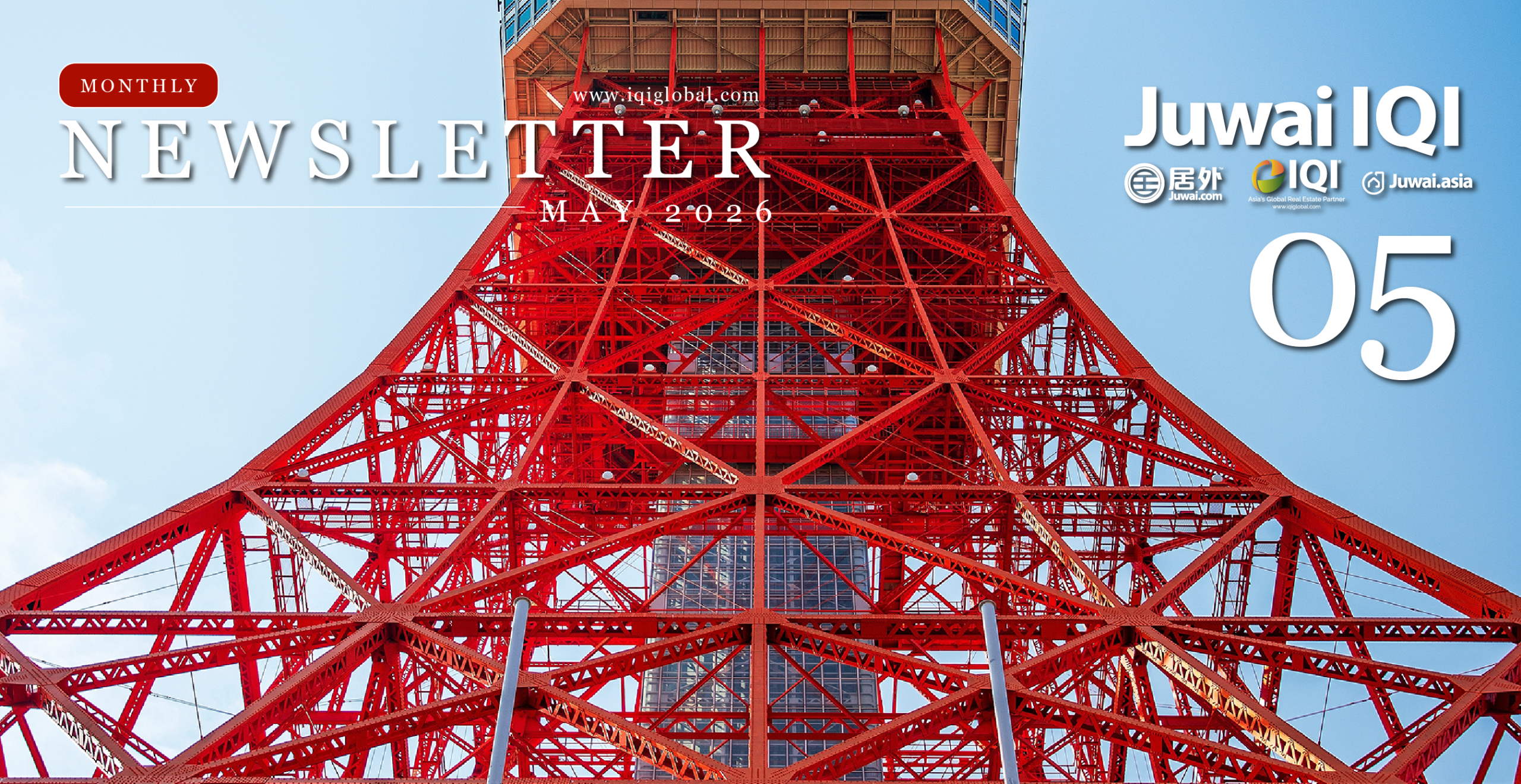
The May 2026 Juwai IQI Global Real Estate Newsletter highlights a property market that is becoming more selective, data-driven and opportunity-focused. Across major regions, investors are no longer looking only at price growth. They are paying closer attention to fundamentals such as supply, infrastructure, developer credibility, rental demand, policy reform and long-term economic resilience.In Australia, the housing market continues to show uneven growth. Perth remains the strongest performer, supported by limited housing supply and strong price momentum, while Sydney and Melbourne are experiencing softer conditions due to higher listings and more cautious buyer activity. This reflects a wider shift where performance depends heavily on local supply and demand, not just national market sentiment.Cambodia is showing signs of recovery, led by landed homes, real buyer demand and infrastructure-linked growth corridors. Areas connected to Ring Road 3 and the New Techo International Airport are becoming more attractive as investors shift toward long-term value instead of short-term speculation.Dubai remains active, but investors are becoming more careful. In an off-plan-heavy market, developer credibility, delivery record and product quality now matter as much as location. A strong address may attract buyers, but the right developer determines the final investment outcome.Malaysia’s property market is also changing as buyers become smarter and more data-driven. With access to transaction records, valuation tools and market comparisons, modern buyers expect real estate professionals to offer more than listings. Agents must now provide faster responses, stronger insights and better advisory value.Lifestyle markets such as Greece and Italy continue to attract international interest. Greece is supported by strong tourism, Golden Visa demand and limited supply, while Sardinia offers seasonal rental opportunities as summer demand builds.In Thailand, foreign condo demand is moving toward more affordable and practical homes. Chinese buyers remain important, but Indian buyers are emerging strongly, especially for larger family-sized units intended for long-term living.Vietnam, Pakistan and the Philippines are facing different market conditions. Vietnam is seeing short-term pressure from higher mortgage rates, but large urban projects support long-term confidence. Pakistan is gradually recovering as buyers favour safer, legally approved projects. The Philippines remains cautious due to energy-driven inflation, although industrial real estate continues to show resilience.Overall, May 2026 points to a global real estate market where smarter decision-making matters more than ever. The strongest opportunities are no longer just in fast-rising markets, but in locations with strong fundamentals, reliable demand, quality developers and long-term growth potential.Discover more hereDownload
5 May

Italy Property Market 2026: Stability and Lifestyle Investment Appeal
Italy: A Resilient Safe Haven for Global InvestorsItaly’s real estate market continues to show strong resilience in 2026, even as global conditions remain uncertain. Despite geopolitical tensions and energy price fluctuations, demand for prime Italian properties has remained steady, especially among international investors seeking secure and stable assets.Why Italy Remains AttractiveThe strength of Italy’s property market lies in its fundamentals. A combination of rich cultural heritage, high living standards, and a stable legal framework makes it a reliable choice for both lifestyle buyers and long-term investors.Demand continues to hold firm in prime locations and lifestyle-driven destinations, reinforcing Italy’s position as a safe haven within Europe.Sardinia: A Premium Investment HotspotSardinia stands out as one of the most attractive regions in Italy. Its exclusive coastal properties, luxury villas, and limited supply continue to draw strong interest from international buyers, particularly from Asia and the Middle East.The island’s unique blend of lifestyle appeal and long-term value makes it a key focus for investors looking for both capital preservation and quality living.Growing International DemandGlobal investors are increasingly shifting towards high-quality, secure assets that offer both lifestyle and investment benefits. Italy’s strategic location, strong infrastructure, and global appeal position it as an ideal destination for portfolio diversification.OutlookLooking ahead, Italy is expected to remain a resilient investment destination as global uncertainty continues. Lifestyle markets such as Sardinia will likely see sustained demand, while prime assets across the country continue to benefit from long-term international interest and capital inflows.Download to see insights from other country marketsDownload
14 April

Australia Property Market Led by Chinese Investment Demand
Chinese buyers continue to play a dominant role in Australia’s residential property market, contributing a significant share of the AU$3.7 billion in total foreign investment. On average, they invest around AU$400 million per quarter, far exceeding other international buyer groups and reinforcing their position as the largest foreign investors.Australia remains one of the most preferred destinations for Chinese buyers, consistently ranking among the top global markets. Its strong education system, stable economy, high quality of life, and proximity to Asia continue to make it an attractive and accessible investment destination.This demand is further supported by migration trends. In 2025, more than 35,000 Chinese citizens moved to Australia, while around 700,000 residents in the country were born in China, highlighting the growing long-term influence of this buyer group on the housing market.Chinese buyers are not only driving investment activity but also shaping long-term residential demand. Their presence continues to support market stability and growth, particularly in key urban areas.OutlookLooking ahead, Chinese investment in Australia is expected to remain resilient, supported by strong migration flows and consistent lifestyle appeal. As global conditions stabilise, this segment is likely to continue playing a key role in sustaining demand and supporting long-term market growth.Discover More HereDownload
14 April

People’s Financial Guide April 2026: Smart Investment Strategies for 2026
Build Financial Flexibility FirstIn periods of uncertainty, liquidity becomes one of the most important financial tools. Maintaining accessible savings or low-risk assets helps investors manage unexpected expenses and avoid selling long-term investments during market volatility. This creates a stronger financial cushion and allows for more strategic decision-making.Diversification Remains the Core StrategyA well-diversified portfolio continues to be the most effective way to manage risk. By spreading investments across asset classes such as equities, fixed income, commodities, and real estate, investors can reduce exposure to any single market shock while still capturing long-term growth opportunities.Real Estate as a Long-Term AnchorIn an environment shaped by inflation and interest rate uncertainty, real estate remains a key pillar of financial stability. As a tangible asset, it offers both capital preservation and consistent income through rental yields. Well-located residential properties, especially in growing urban areas, continue to demonstrate resilience over time.Quality and Sustainability Matter More Than EverInvestor focus is also shifting towards higher-quality and energy-efficient developments. Modern properties with lower operating costs and sustainable features are increasingly preferred by tenants, helping to support stronger long-term value and demand.Financial markets will always move in cycles, especially during periods of global uncertainty. The key difference lies in how investors respond. Those who remain disciplined, patient, and focused on fundamentals are better positioned to navigate volatility and protect their wealth.Discover more hereDownload
14 April

Global Economic Outlook 2026: Inflation, Energy, and Investment Shifts
A Narrow Path for Global GrowthThe global economy in 2026 is entering a phase of cautious stability. Growth remains resilient at around 3.3%, supported by steady trade recovery and strong sovereign demand. However, this stability sits alongside rising geopolitical tensions and persistent inflation risks, creating a more complex investment environment.Monetary Policy Reaches Its LimitsCentral banks are now navigating a difficult balance. While inflation has moderated, aggressive rate tightening cycles in recent years have left limited room for further intervention without risking financial instability.Across major economies, growth remains uneven. The United States continues to outperform, while Europe and the UK face structural constraints. China remains a key stabiliser, supported by industrial capacity and policy support.Energy Shocks and the Return of Inflation RiskThe most critical risk in 2026 lies in geopolitical developments, particularly in energy-sensitive regions. Tensions affecting key oil routes such as the Strait of Hormuz highlight how vulnerable global supply chains remain.Historically, energy shocks have been the starting point of broader inflation cycles. As energy prices rise, the impact spreads across transportation, construction, and financing costs, reinforcing inflationary pressure across the global economy.The Strategic Repricing of Hard AssetsIn response, markets are entering a phase where hard assets are being repriced. Gold and commodities typically react first, but real estate and other tangible assets follow as investors reposition portfolios toward stability.Unlike financial assets, real estate adjusts more gradually. Instead of sharp corrections, rising costs and tighter liquidity reshape market dynamics over time, reinforcing its role as a long-term store of value.Final TakeThe current environment marks a shift from cyclical investing to structural positioning. Investors are increasingly prioritising resilience, focusing on assets that can withstand inflation, volatility, and geopolitical disruption.Discover more hereDownload
14 April

