

Negotiator ∙ Elite
Lim Kok Chin
REN41643
Negotiator ∙ Elite
Lim Kok Chin
REN41643
About Lim Kok Chin
Professional Real Estate Agent committed to providing exceptional service and expertise in the property market.
2 years at IQI
Contact Lim Kok Chin
Lim Kok Chin Social Links
No social links available.
My Listings
No listings available at the moment.
Our newly launched projects
Discover the real estate properties in and around Kuala Lumpur, Malaysia. Buy apartment units, landed houses, bungalows, commercial office space, shop lots, and sub-sales with 100% confidence at IQI Global.

Sanctuary Suria
Taman Impian Indah, 14100 Bukit Mertajam, Penang, Malaysia
Starting from RM 800,000
Listed on September 9, 2024
Duduk Ceria
Batu Kawan, Seberang Perai Selatan, Seberang Perai, Pulau Pinang, 14110, Malaysia
Starting from RM 443,000
Listed on August 21, 2024
Taman Mengkuang Jaya 3
Jln Mengkuang Jaya, 14400 Kubang Semang, Pulau Pinang, Malaysia
Starting from RM 741,000
Listed on August 13, 2024
Saujana Permai
97, Jalan SP Saujana Permai 1, 4, Taman SP Saujana Permai, 08000 Sungai Petani, Kedah, Malaysia
Starting from RM 530,100
Listed on June 27, 2024
Andalan @ Bukit Jalil
Jalan Mas 1, Kuala Lumpur, 47180, Malaysia
Starting from RM 300,000
Listed on June 6, 2024
Sanderling Lakefront @ Cyberjaya
Cyberjaya, 63000 Cyberjaya, Selangor, Malaysia
Starting from RM 488,800
Listed on December 20, 2023
Mortgage Calculator
Calculate your estimated month repayment and plan your monthly expenses well.
The mortgage calculator is intended for reference only. Actual amount may vary.
Monthly Payment
Send me the mortgage calculator result

Home Loan Eligibility Calculator
Calculate your potential loan amount and assess your home buying affordability.

Rental Yield
Calculate the potential rental yield and evaluate a property's investment performance.

Down Payment Saving Plan
Create a structured savings plan and determine how much to save monthly for your down payment plan.

Malaysian Property Transaction Fees Calculator
Estimate the total transaction fees and budget accurately for your Malaysian property purchase.
IQI blog & news
Articles specifically curated for your daily digest of local and global real estate news.

Version: BM TLDR: Bandar Malaysia is a proposed RM140 billion redevelopment that could become one of the largest urban transformation projects in Kuala Lumpur. With its transport-led masterplan and phased development approach, it is positioned as more than a typical project. The key question is whether it can function as a new KL growth corridor that supports long-term expansion and connectivity Large urban projects often begin as plans on paper before they gradually reshape the city around them. At first, many people are unsure what they will become. Over time, some of these developments change how areas function, how people move, and where businesses grow. Now, attention is turning to Bandar Malaysia. With an estimated value of RM140 billion, it is positioned as one of the largest redevelopment plans in the capital. For many Malaysians, the name is familiar but still unclear. Is it simply another mega project, or could it influence where and how Kuala Lumpur grows next? Key Take Aways Bandar Malaysia is a RM140 billion redevelopment on the former Sungai Besi site The masterplan focuses on transit-oriented design and phased development It is structurally larger than TRX and different from KL Sentral and Mid Valley Surrounding areas may benefit gradually if connectivity improves Execution and transport delivery will determine whether it becomes a true growth corridor Understanding Bandar Malaysia: Key Areas We Explore What Is Bandar Malaysia and Why Does It Matter? The Strategic Location and Connectivity Edge How Bandar Malaysia Compares to Other KL Mega Projects 1. Compared to Tun Razak Exchange 2. Compared to Kl Sentral 3. Where Bandar Malaysia Stands Today What Could Drive Long-Term Growth? Potential Impact on Surrounding Property Markets Key Risks and Considerations So, Is This Kuala Lumpur’s Next Growth Corridor? FAQ What Is Bandar Malaysia and Why Does It Matter? Bandar Malaysia is a large-scale redevelopment of the former Sungai Besi airbase site, covering one of the last major land parcels within central Kuala Lumpur. It is positioned as one of the most ambitious urban transformation plans in Malaysia. According to recent official updates, redevelopment is expected to begin in phases from end 2026, guided by smart city planning and transit-oriented design. The Bandar Malaysia masterplan is planned as a mixed-use district that combines residential, commercial, and transport components within the wider Klang Valley. This scale is significant. In a city like Kuala Lumpur, where most prime land has already been developed, large, connected sites are hard to find. Projects of this size allow planners to think beyond single buildings and plan how a whole district links with the rest of the city. To understand Bandar Malaysia, we must look at its bigger role. It is not just a new development, but a long-term plan that may influence how Kuala Lumpur expands in the years ahead. The Strategic Location and Connectivity Edge Source: News Straight Times One of the main strengths of Bandar Malaysia is its location. The site is on the former Sungai Besi area, located between existing city centres and major roads. This means it is close to key business areas while still having enough space for large-scale planning. From a connectivity perspective, the area is linked to major highways such as the Sungai Besi Expressway, Maju Expressway, and the Kuala Lumpur–Seremban Expressway. Its proximity to KL Sentral and Tun Razak Exchange also places it within the wider network of the Klang Valley. This matters because location alone does not create growth. Good connectivity does. When roads, rail lines, and buildings are planned together, it becomes easier for people to move around, and business activity can grow more smoothly. Instead of depending on one crowded city centre, a well-connected area can help spread growth across different parts of the city. This is how a wider growth corridor can form over time. In simple terms, the right location gives a project visibility. The right connectivity gives it a function. For Bandar Malaysia, the advantage lies in having both. How Bandar Malaysia Compares to Other KL Mega Projects To see what Bandar Malaysia could turn into, we can look at other big projects in Kuala Lumpur. Each one played a different role. Comparing them is not about saying they are the same, but about understanding how cities grow step by step. Think of it this way: some projects build a new room in the house. Others extend the entire house. 1. Compared to Tun Razak Exchange TRX was built as a financial centre. Its goal was clear — to create a focused business district. Over time, offices, retail, and public spaces came together, and that part of Kuala Lumpur became more active. Bandar Malaysia is planned on a much larger piece of land. If TRX is like building a strong new room in the city, Bandar Malaysia is more like planning a whole new wing. It includes homes, offices, and transport links together under one masterplan. The aim is not just to create a business district, but to support wider city growth. 2. Compared to Kl Sentral KL Sentral grew because of transport. When trains, offices, hotels, and retail were built together, it became one of the busiest areas in the city. Good connectivity brought people, and people brought activity. Bandar Malaysia also focuses on connectivity. The difference is that KL Sentral improved an existing transport hub, while Bandar Malaysia has the chance to design a new district from the beginning. It is like starting with an empty field instead of renovating an old building. 3. Where Bandar Malaysia Stands Today Unlike TRX and KL Sentral, which are already active and established, Bandar Malaysia is still in the early redevelopment stage. Its impact will not happen overnight. In simple terms, it is still at the blueprint stage. The true test will be how well the plans are carried out and how smoothly transport and development come together over time. This comparison shows one thing clearly: Bandar Malaysia is not trying to replace TRX or KL Sentral. Instead, it could become the next layer of growth in Kuala Lumpur’s expansion. What Could Drive Long-Term Growth? For a project this large, growth will not happen because of one big announcement. It will depend on how different parts are delivered over time. First, transport connectivity will be important. Official updates highlight that Bandar Malaysia is planned around transit-oriented design. In simple terms, when trains, roads, homes, and offices are planned together, areas become easier to access. In many parts of Kuala Lumpur, locations near major transport hubs such as KL Sentral and Tun Razak Exchange saw activity increase gradually as connectivity improved. Second, phased development matters. Large projects like TRX did not grow overnight. They developed in stages. Each completed phase built more confidence. Bandar Malaysia is expected to follow a similar phased approach, with redevelopment targeted from end 2026, based on recent national media reports. Source: DBKL Third, integration with the wider Klang Valley will influence demand. According to the Kuala Lumpur Structure Plan 2040 by DBKL, future urban growth is guided by better transport links and balanced development across the city. A district grows stronger when it connects naturally with surrounding centres rather than standing alone. In simple terms, long-term growth depends on delivery. If infrastructure, planning, and development move together step by step, Bandar Malaysia has the structure to evolve into a meaningful KL growth corridor over time. Potential Impact on Surrounding Property Markets Large projects usually affect nearby areas first. If Bandar Malaysia moves forward as planned, areas such as Sungai Besi, Bandar Tasik Selatan, Salak South, and Kuchai Lama could slowly gain more attention. When transport improves, people find it easier to travel. When travel becomes easier, more people are willing to live or work nearby. This does not mean property prices will rise quickly. Growth linked to infrastructure usually happens step by step. We saw similar patterns around KL Sentral and Tun Razak Exchange. As those areas became more connected and active, nearby locations also became more attractive over time. However, this depends on delivery and execution. If transport links and development phases are completed smoothly, nearby areas may benefit. If progress slows down, the impact may take longer. In simple terms, better connectivity can support steady demand. But real change happens gradually, not overnight. Key Risks and Considerations Large projects like Bandar Malaysia take many years to complete. While the plan is ambitious, the outcome depends on how well each phase is delivered. First, execution matters. Redevelopment is expected to move forward in phases, which means progress will happen step by step. If transport works or approvals face delays, momentum may slow. Large projects rarely move all at once. Second, market conditions can change. Property markets go through cycles. If new supply enters during a slower period, demand may take longer to adjust. This is common in major redevelopment zones and does not remove long-term potential, but it affects short-term pace. Third, connectivity must be delivered as planned. Since the masterplan focuses on transit-oriented design, strong rail and road links are central. Without proper transport integration, the idea of a growth corridor becomes harder to realise. In simple terms, the vision is large, but delivery determines impact. Big plans bring opportunity, but they also require steady coordination, funding, and time. So, Is This Kuala Lumpur’s Next Growth Corridor? Bandar Malaysia has the scale, location, and planning direction to support long-term urban growth. With its RM140 billion masterplan and focus on transport integration, it is structured differently from typical standalone developments. But becoming a true growth corridor is not about size alone. It depends on how well infrastructure is delivered, how phases are executed, and how naturally the district connects with the rest of Kuala Lumpur. In simple terms, Bandar Malaysia is not competing with existing centres. It is positioned to support the city’s next stage of expansion. Whether it fully becomes Kuala Lumpur’s next growth corridor will depend less on headlines and more on consistent execution over the coming years. For now, it remains a long-term story worth understanding and watching as the city continues to evolve. FAQ Is Bandar Malaysia confirmed to start in 2026? Recent official updates indicate that redevelopment is expected to begin in phases from end 2026. However, large projects of this scale are usually delivered step by step over several years. The timeline marks the beginning of phased development, not full completion. Why is Bandar Malaysia important for Kuala Lumpur? Bandar Malaysia sits on one of the last large land parcels within central Kuala Lumpur. Its size allows planners to design transport, residential, and commercial components together under one masterplan. If executed properly, it could support the city’s next stage of expansion rather than simply adding more buildings into already crowded areas. Will Bandar Malaysia affect Sungai Besi property prices? Improved connectivity and new development often bring more attention to nearby areas such as Sungai Besi and Bandar Tasik Selatan. However, property growth linked to infrastructure usually happens gradually. The actual impact will depend on how smoothly transport integration and phased development are delivered. What makes Bandar Malaysia different from TRX? Tun Razak Exchange (TRX) was developed mainly as a financial district. Bandar Malaysia is broader in scope. It combines residential, commercial, and transport planning across a much larger site. While TRX created a focused business hub, Bandar Malaysia is positioned to support wider urban expansion. Is Bandar Malaysia a good long-term investment area? It has structural strengths such as scale, location, and transport-focused planning. However, long-term investment potential depends on execution, market timing, and connectivity delivery. As with all large redevelopment zones, outcomes will unfold gradually rather than immediately. Planning your next property move? Reach out to IQI to assess how long-term growth corridors like Bandar Malaysia may fit into your strategy. [custom_blog_form] References: Bernama (2025). Bandar Malaysia redevelopment to begin end 2026.https://bernama.com/en/news.php?id=2394800 The Star (2025). Bandar Malaysia project to begin end 2026, says ministry.https://www.thestar.com.my/news/nation/2025/11/13/bandar-malaysia-project-to-begin-end-2026-says-ministry Malay Mail (2025). Bandar Malaysia redevelopment to begin end 2026 with smart city, transit-oriented design. https://www.malaymail.com/news/malaysia/2025/11/13/bandar-malaysia-redevelopment-to-begin-end-2026-with-smart-city-transit-oriented-design/198225 Dewan Bandaraya Kuala Lumpur (DBKL). Pelan Struktur Kuala Lumpur 2040 (PSKL 2040).https://ppkl.dbkl.gov.my/en/pskl2040/ New Straits Times (2020). Bandar Malaysia to start over with 12 world-class towers worth RM10 billion in 2021.https://www.nst.com.my/property/2020/09/626299/bandar-malaysia-start-over-12-world-class-towers-worth-rm10-billion-2021

Version: CN TL;DRMalaysia’s property buying and rental price in Malaysia story in 2026 is steady, selective, and data-driven. Median house prices are RM290,000; rental yields average 4%–6%, and price growth forecasts range from 1% to 5%. Kuala Lumpur remains premium, while suburban corridors offer stronger rental returns. Buying costs add 6%–12% to the purchase price. It’s not a boom cycle — it’s a disciplined opportunity market. Thinking about buying in Malaysia? Or maybe renting first? Here’s the problem: headlines say “selective recovery.” Some say prices are rising. Others say growth is flat. Rental yields vary depending on who you ask. And affordability looks stretched on paper. So what’s actually happening? Let’s break down the property buying and rental price in Malaysia using official NAPIC data, Bank Negara figures, Savills commentary, Rehda forecasts, and verified market sources — with real examples and numbers you can use. Key Takeaways The median house price in Malaysia is RM290,000, while the average is RM494,000. Rental yields range from 4%–6% nationally, with selected suburban areas reaching 6%–8%. The OPR stands at 2.75%, keeping mortgage costs stable. 2026 price growth forecasts range between 1% and 5%, depending on segment and location. Buying costs add approximately 6%–12% to the purchase price. Read This Before Buying Your Property in Malaysia!1. What Is the Average Property Price in Malaysia in 2026?2. What Are Rental Prices and Rental Yields in Malaysia in 2026?3. How Much Does It Cost to Buy a House in Malaysia?4. Is Property in Malaysia Still Affordable?5. Should You Buy or Rent in Malaysia in 2026?6. Malaysia Property Market Forecast 2026–20307. Frequently Asked Questions (FAQs) 1. What Is the Average Property Price in Malaysia in 2026? Let’s start with the most misunderstood number: property price in Malaysia. According to NAPIC: MetricValueMedian House PriceRM290,000Average House PriceRM494,000Typical Market RangeRM150,000–RM550,00010-Year Nominal Growth+44%10-Year Real Growth (Inflation Adjusted)+19%Source: NAPIC a. Why Median Matters More Than Average The median reflects what typical buyers pay. The average gets skewed by luxury condos. Example: If 9 houses sell for RM300,000 and 1 sells for RM5 million, the average price will increase. The median stays realistic. That’s why serious investors focus on median transaction values. b. Kuala Lumpur vs National Market LocationMedian PriceMalaysiaRM290,000Kuala LumpurRM600,000Johor BahruRM470,000SelangorRM460,000Source: Brickz Prime KL areas such as KLCC can command RM1,400–RM1,670 per sq ft. Meanwhile, in Cheras and Setapak, prices range from RM230 to RM430 per sq ft. This price dispersion creates both opportunity and risk, depending on entry timing. If you’re evaluating these micro-markets, IQI Global’s data analytics tools can provide state-level transaction comparisons, helping buyers accurately assess new-launch vs. subsale dynamics. 2. What Are Rental Prices and Rental Yields in Malaysia in 2026? Rental data provides investors with clarity. According to Bambooroutes: Unit TypeMalaysia AverageStudioRM1,5001-BedroomRM2,0502-BedroomRM2,750 Prime KL Rental Rates Area2-Bedroom RentKLCCRM4,500Mont KiaraRM4,200BangsarRM3,800 a. What Is the Average Rental Yield in Malaysia? According to iProperty: Average gross rental yieldPrime KLSuburban/emerging5.19%4%–5%6%–8% Numbeo reports: LocationGross YieldCity Centre4.09%Outside Centre4.96% This variation depends on the purchase price. i. Investor Case Study #1: KL City Centre Condo Purchase price: RM1,200,000Monthly rent: RM4,500Annual rent: RM54,000 Gross yield = 4.5% After RM10,000 annual expenses: Net yield ≈ 3.7% Stable. Prestige. Lower yield. ii. Investor Case Study #2: Suburban Condo (Setapak) Purchase price: RM450,000Monthly rent: RM2,200Annual rent: RM26,400 Gross yield = 5.9% After RM5,000 expenses: Net yield ≈ 4.7% Higher yield. More tenant turnover risk. This is where strategy matters. If you’re optimizing rental pricing, IQI Global’s property management and MyKey hospitality platform can assist with long-term or short-stay yield modelling. 3. How Much Does It Cost to Buy a House in Malaysia? Beyond purchase price, buyers must account for transaction costs. Expect an additional 6%–12%. a. Example: RM500,000 Property Cost ComponentEstimated AmountStamp DutyRM9,000Legal FeesRM3,500–RM5,000Loan Stamp DutyRM2,000Valuation FeesRM1,000–RM5,000Basic RenovationRM15,000–RM30,000 Total additional: RM30,000–RM60,000 b. Stamp Duty Breakdown (Locals) Price TierRateFirst RM100k1%Next RM400k2%Next RM500k3%Above RM1m4%Source: Pacific Prime Foreign buyers may pay 4%–8%, depending on the state and value. c. Investor Case Study #3: Full Cost Breakdown (RM800,000 Condo) Purchase: RM800,000Stamp duty: RM21,000Legal + bank: RM8,000Renovation: RM40,000 Total entry cost ≈ RM869,000 Rent at RM3,500/month → RM42,000 annually Gross yield based on full cost: 4.8% Understanding real entry yield prevents overestimation. IQI Global’s one-stop services — brokerage, valuation, financing, and renovation through IQI Concept — significantly simplify the process. 4. Is Property in Malaysia Still Affordable? Now the hard question. Numbeo reports: IndicatorValuePrice-to-Income Ratio8.93Mortgage % of Income66.53%Loan Affordability Index1.50Source: Numbeo That suggests pressure, especially in urban centres. However: OPR = 2.75% as of July 2025 First-home stamp duty exemption below RM500k extended until 2027 Financing guarantees increased to RM20 billion. According to Prof Barjoyai Bardai, 2026 represents a “selective recovery.” Translation: well-priced projects move. Overpriced units stagnate. 5. Should You Buy or Rent in Malaysia in 2026? Let’s compare using KWSP’s Mont Kiara example: ScenarioMonthly CostRentRM4,891MortgageRM4,990MaintenanceRM400Ownership TotalRM5,390 Difference: RM400–RM1,000. If you invest RM1,000 per month at 5% annual interest for 10 years, you will accumulate approximately RM155,000. So buying isn’t automatically better. Buy if: Long-term stay (7+ years) Stable income Desire equity Rent if: Career mobility Short-term stay Prefer liquidity There is no universal answer. Only personal strategy. 6. Malaysia Property Market Forecast 2026–2030 Forecasts vary: Rehda: 1–2% growth Malaysian Reserve economists: 2.5%–5% NAPIC: 0.1% YoY Savills Malaysia expects infrastructure-led growth. Major drivers: LRT3 RTS Johor–Singapore ECRL 91 billion Data centre investments in Johor The industrial and logistics sectors are experiencing strong demand driven by AI and data infrastructure expansion. This suggests moderate, corridor-driven appreciation rather than a nationwide boom. a. Landed vs High-Rise: Which Performs Better? FactorHigh-Rise CondoLandedEntry PriceLowerHigherYield4%–6%3%–5%MaintenanceStrata feesIndividual upkeepCapital AppreciationModerateStronger long-termTenant PoolLargerFamily-focused Urban Malaysia favours condos (55% of transactions), but landed remains aspirational. Malaysia’s property market in 2026 is rational, data-supported, and opportunity-based. Not speculative.Not collapsing.But selective. With infrastructure rollout, stable OPR, and regional affordability advantage, Malaysia remains attractive to both domestic and global investors. If you’re exploring property locally or cross-border, IQI Global operates in 35+ countries with 65,000 professionals and $4.3B in sales (2025). From subsale and new launch to valuation, renovation, and global investment diversification, IQI provides a full-stack real estate ecosystem. 7. Frequently Asked Questions (FAQs) 1. What is the average house price in Malaysia in 2026? The median price is RM290,000; the average is RM494,000. 2. What is the rental yield in Kuala Lumpur? Prime KL yields typically range from 4% to 5%. 3. Is Malaysian property a good investment? Malaysia offers stable 4%–6% yields and projected growth of 1%–5%. 4. What is the current OPR in Malaysia? The OPR is 2.75%. 5. How much down payment is required? Typically 10%–30% depending on the margin of finance. 6. Which state offers the highest rental return? Emerging suburban areas in the Klang Valley may reach 6%–8%. 7. Are property prices rising in 2026? Growth is projected to range from 1% to 5%, depending on location. Ready to invest in Malaysia? Partner with IQI Global for expert guidance, powerful market data, and access to prime local and international properties. Let’s turn your property goals into real returns today. [custom_blog_form] Continue Reading: Best Housing Loan Rates to Secure in February 2026 Starting an Airbnb in Malaysia (2026): A Side-Hustler’s Real-Life Guide 6 Factors Investors Must Check Before Investing in Properties Reference Bambooroutes. (2026, January 26). What are housing prices like in Malaysia right now? (2026). Retrieved from http://bambooroutes.com/blogs/news/malaysia-housing-prices Bambooroutes. (2026, January 26). What are rents like in Malaysia right now? (2026). Retrieved fromhttp://bambooroutes.com/blogs/news/malaysia-rents Brickz. (n.d.). Residential transactions. Retrieved fromhttps://www.brickz.my/transactions/residential/ Global Law Experts. (2025, November). A 2025–2026 guide to buying residential property in Malaysia for foreigners. Retrieved from https://globallawexperts.com/a-2025-2026-guide-to-buying-residential-property-in-malaysia-for-foreigners/ iProperty. (2026, February 11). How to calculate the rental rate in Malaysia. Retrieved fromhttps://www.iproperty.com.my/guides/how-to-calculate-the-rental-rate-in-malaysia-64737 Kaur, S. (2026, January 5). Malaysia's property market set for 2026 ‘step-up’. New Straits Times. Retrieved from https://www.nst.com.my/property/2026/01/1350529/malaysias-property-market-set-2026-step Kaur, S. (2026, January 6). Malaysia's residential property prices set for modest 1–2pct rise in 2026, says Rehda. New Straits Times. Retrieved from https://www.nst.com.my/property/2026/01/1351509/malaysias-residential-property-prices-set-modest-1%E2%80%932pct-rise-2026-says KWSP. (2025, June 13). Buy or rent — what’s right for you? Retrieved fromhttps://www.kwsp.gov.my/en/w/article/buy-vs-rent-malaysia Numbeo. (2026, February 9). Property prices in Malaysia. Retrieved fromhttps://www.numbeo.com/property-investment/country_result.jsp?country=Malaysia Pacific Prime. (2026, January 15). The cost of living in Malaysia 2026. Retrieved fromhttps://www.pacificprime.com/blog/cost-of-living-in-malaysia.html The Malaysian Reserve. (2026, January 5). House prices seen rising 2.5–5% in 2026. Retrieved from https://themalaysianreserve.com/2026/01/05/house-prices-seen-rising-2-5-5-in-2026/

For years, the “10% down-payment rule” has been one of the biggest psychological and financial barriers to homeownership in Malaysia. The assumption was simple: no large cash reserve, no entry. Budget 2026 changes that narrative, placing greater emphasis on financing accessibility rather than affordability alone. With enhanced policy tools now in place, aspiring homeowners may no longer need to delay their plans until they have saved a significant lump sum—provided they understand how to use the right mechanisms strategically. The key financial levers in 2026 include the expanded Housing Credit Guarantee Scheme (SJKP) with up to 120% guarantee coverage, full stamp duty exemptions for eligible first-time buyers, and strategic use of EPF (KWSP) as a liquidity bridge. Together, these tools can significantly reduce upfront cash requirements and improve purchase feasibility, subject to eligibility and bank assessment. The real question in 2026 is no longer how fast one can save 10%, but which combination of tools best fits individual income profiles and cashflow. Buyers who assess their SJKP eligibility early, confirm stamp duty relief, and plan EPF usage responsibly will be best positioned to turn homeownership from intention into action. Download the full report for deeper market insightsDownload
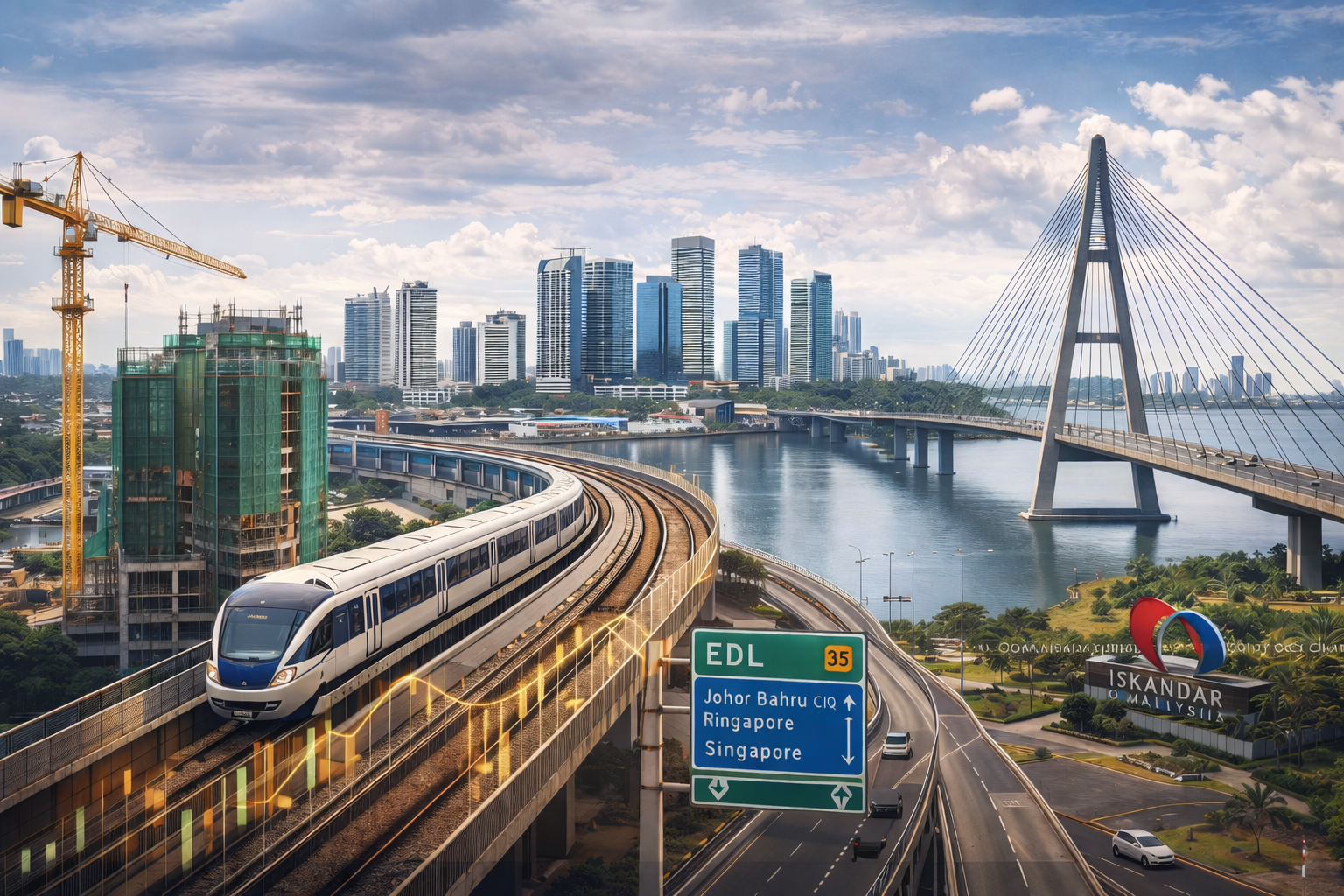
Johor’s property market continues to expand, but the focus is shifting from pure growth to infrastructure readiness. According to Kashif Ansari, Co-Founder and Group CEO of Juwai IQI, the defining issue shaping real estate decisions is no longer just location or pricing, but access to electricity and water. As highlighted in coverage by Astro Awani and Bernama, developments without secured utility access are facing rising uncertainty, while infrastructure-ready land is gaining premium value. This shift is being accelerated by Malaysia’s rapid emergence as a regional data centre hub. Data centres are intensive users of power and water, and according to global insights from the International Energy Agency, demand is growing faster than supporting infrastructure can be delivered. Mr Ansari describes this imbalance as a “power pinch,” already influencing developer site selection, investor risk assessment, and project design. While Johor sits at the centre of this trend, the implications extend nationwide, signalling that infrastructure availability will increasingly guide pricing, timing, and momentum across Malaysia’s property market. Download the full report for deeper market insightsDownload
Ready to get started?
Get in touch now.